

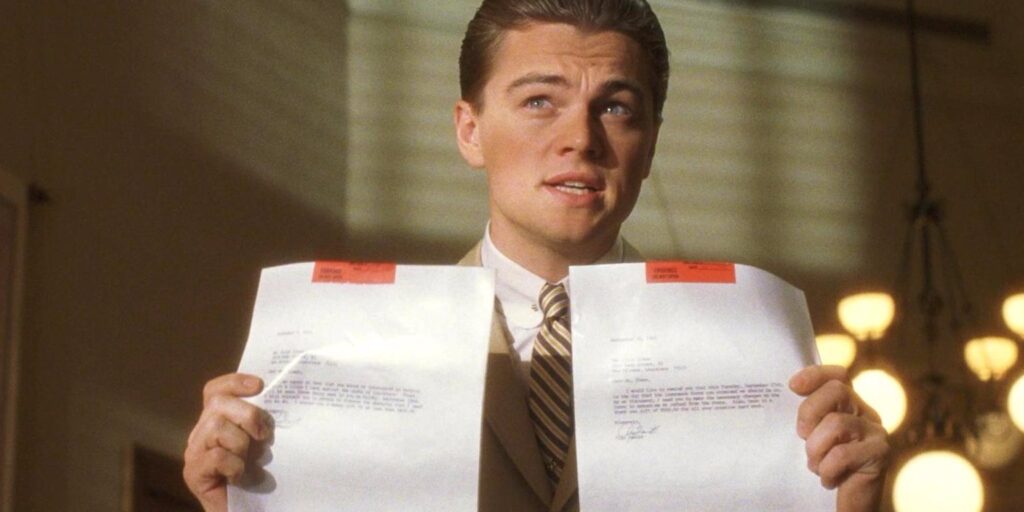
White Collar crime-The Smart Mind Behind the Perfect Fraud
Frank Abagnale Jr. didn’t rob banks with a gun — he robbed them with charm, intelligence, and a pilot’s uniform. Before cybersecurity systems and biometric scans, he outsmarted airlines, banks, and law enforcement across continents. His story, shown in Catch Me If You Can, isn’t just entertainment — it’s a lesson in how intelligence and psychology can drive white-collar crime.
Perception is the Reality
Frank’s genius lay not in forgery, but in perception. He impersonated a pilot, a doctor, a lawyer, even an FBI consultant. His real weapon wasn’t paper or ink — it was human psychology.
Behavioral experts often describe deception as a skill of cognitive empathy — the ability to read emotions, predict reactions, and craft lies that feel like truth. Abagnale mastered this art effortlessly. He studied people, mirrored behavior, and created trust before exploiting it. His story proves that the smartest frauds aren’t built on greed alone — they’re built on understanding people.
Confidence: The Currency of Deceit
The brilliance of Abagnale’s deception lies in how he leveraged confidence. People rarely questioned him because he looked and sounded legitimate. In psychology, this is known as the halo effect — when we assume someone competent in one area must be competent in others.
The white uniform, polished shoes, and charming smile did more work than any fake ID could. He turned confidence into credibility — and credibility into control. It’s the same mechanism corporate fraudsters use today, only with spreadsheets instead of flight suits.
The Illusion of Control
Psychologists Daniel Kahneman and Amos Tversky described the overconfidence bias — when smart people overestimate their control over risk. Abagnale believed his intelligence could outthink the law. That same mindset exists today in corporate boardrooms, where executives manipulate reports or conceal losses thinking they can “fix it later.”
In both cases, fraud doesn’t start with malice — it starts with overconfidence. The belief that intellect is immunity.
Ethical Dilemma in Corporate Life
Albert Bandura’s concept of moral disengagement explains how people convince themselves that unethical acts are justifiable. Abagnale once claimed he didn’t think of himself as a criminal — just “someone playing the game better.”
This mental trick is common in corporate fraud too. Manipulating data becomes “protecting shareholder value.” Bribery turns into “relationship management.” When intelligence meets rationalization, deceit starts to look like innovation.
The Thrill of challenging the System
What drives a white-collar criminal isn’t just money — it’s mastery. Abagnale described his schemes as challenges, not crimes. That mindset — seeing fraud as a puzzle to solve — is what makes intelligent offenders so dangerous. They operate on logic, not rage. On planning, not impulse.
This blend of intellect and moral drift is what GAFA calls the cognitive anatomy of fraud — where curiosity, confidence, and justification collide to create deception.
The Culture That Enables the Lie
Abagnale could only thrive because systems trusted appearances. Just like modern corporations often trust results over ethics. When oversight weakens and compliance becomes procedural, deception finds its space to grow.
Fraud doesn’t happen in darkness — it happens in daylight, when everyone assumes someone else is watching.
From Deception to Detection
Ironically, the same mind that once fooled banks now helps prevent fraud. Today, Frank Abagnale works with law enforcement and compliance bodies to educate professionals about deception. His transformation proves a timeless truth — the difference between a fraudster and a fraud investigator often lies in direction, not intelligence.
At the Global Association of Forensic Accountants (GAFA), this psychological dimension of fraud is central to training. Understanding why people deceive is just as important as knowing how they do it. Because every fraud begins in thought long before it touches a balance sheet.
Final Thought
White-collar crime isn’t about greed; it’s about mindset.
The smartest criminals don’t just break systems — they understand them better than anyone else.
And that’s exactly why those fighting fraud must learn to think just as smart.