
Insurance fraud is a growing global challenge, costing companies billions every year. In India, with the rapid expansion of insurance coverage and digital claims processing, fraud risks have increased significantly. This makes insurance fraud detection one of the most critical functions in the insurance ecosystem.
In this guide, we’ll explore key techniques, tools, and strategies used in detecting and preventing insurance fraud, along with how technology is transforming the industry.
What is Insurance Fraud Detection?
Insurance fraud detection refers to the process of identifying suspicious or false insurance claims using investigative techniques, data analysis, and technology. It involves detecting intentional misrepresentation, fake documentation, or exaggerated claims submitted to insurers.
Fraud detection in insurance claims ensures that companies only pay genuine claims, helping maintain financial stability and trust in the system.
Why Insurance Fraud Detection is Important
Insurance fraud impacts everyone from insurers to policyholders.
Key Reasons:
- Reduces financial losses for insurance companies
- Prevents premium hikes for genuine customers
- Improves operational efficiency
- Enhances customer trust
- Ensures regulatory compliance
With increasing fraud sophistication, companies are investing heavily in fraud detection and prevention in insurance systems
Best anti-money laundering certification online
Types of Insurance Fraud
Understanding fraud types is essential for effective detection:
1. Hard Fraud
Deliberate attempts like staging accidents or faking death.
2. Soft Fraud
Exaggerating legitimate claims (e.g., inflating repair costs).
3. Internal Fraud
Fraud committed by employees or agents within insurance companies.
Traditional Insurance Fraud Detection Techniques
Before advanced technology, insurers relied on manual investigation methods. These are still relevant today.
1. Claim Verification
Cross checking claim details with policy terms and documents.
2. Field Investigation
On ground verification of incidents, especially in motor and property claims.
3. Interviews & Interrogation
Questioning claimants, witnesses, and service providers.
4. Document Examination
Validating medical reports, bills, and repair invoices.
These methods form the foundation of insurance fraud detection techniques.
Advanced Insurance Fraud Detection Techniques
Modern insurers now use data driven approaches for insurance claim fraud detection.
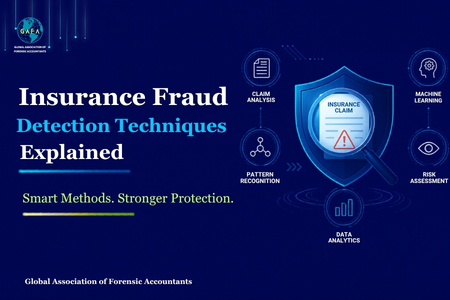
1. Data Analytics
Analyzing large datasets to identify unusual patterns or anomalies.
2. Predictive Modeling
Using historical data to predict the likelihood of fraud.
3. Machine Learning Algorithms
AI models continuously learn and improve fraud detection accuracy.
4. Social Network Analysis
Identifying connections between fraud rings and suspicious entities.
5. Real Time Monitoring
Detecting fraud at the time of claim submission.
These techniques form the backbone of fraud detection analytics in insurance.
AML certification course in India
Role of AI and Technology in Fraud Detection
Technology has revolutionized insurance fraud detection.
Key Technologies:
- Artificial Intelligence (AI)
- Machine Learning (ML)
- Big Data Analytics
- Blockchain
- Robotic Process Automation (RPA)
AI systems can analyze thousands of claims in seconds, flagging suspicious cases for further investigation. This significantly reduces manual effort and improves accuracy.
Insurance Claims Fraud Detection Software
Many insurers use specialized insurance claims fraud detection software to automate and streamline processes.
Features of Fraud Detection Software:
- Automated claim scoring
- Risk profiling
- Pattern recognition
- Real time alerts
- Integration with insurance systems
Benefits:
- Faster claim processing
- Improved fraud detection accuracy
- Reduced operational costs
- Enhanced decision making
These tools are essential for modern fraud detection in insurance claims.
Certified anti-money laundering (CAML) training program
Fraud Detection and Prevention in Insurance
Detection alone is not enough prevention is equally important.
Prevention Strategies:
- Strong KYC (Know Your Customer) processes
- Regular audits and compliance checks
- Employee training and awareness
- Fraud risk management frameworks
- Collaboration with law enforcement agencies
A proactive approach helps reduce fraud before it occurs.
Key Indicators of Insurance Fraud
Recognizing red flags is crucial in insurance fraud detection:
- Inconsistent or incomplete documentation
- Delayed claim reporting
- Frequent claims by the same individual
- Suspicious relationships between parties
- Lack of supporting evidence
These indicators help investigators identify potentially fraudulent cases.
Challenges in Insurance Fraud Detection
Despite advancements, fraud detection remains challenging:
- Increasing sophistication of fraud schemes
- Large volume of claims data
- False positives in detection systems
- Regulatory and privacy constraints
- Limited skilled professionals
This highlights the need for continuous improvement in techniques and technology.
Future Trends in Insurance Fraud Detection
The future of insurance fraud detection techniques is driven by innovation:
Emerging Trends:
- AI powered fraud detection systems
- Blockchain for secure and transparent records
- Advanced predictive analytics
- Integration of IoT data (e.g., telematics in vehicles)
- Real time fraud prevention systems
These trends will redefine how insurers detect and prevent fraud.
Career Opportunities in Insurance Fraud Detection
With growing demand, this field offers excellent career opportunities:
- Fraud analyst
- Insurance investigator
- Risk and compliance specialist
- Data analyst (fraud analytics)
- Forensic accountant
Professionals with expertise in fraud detection analytics in insurance are highly sought after.
Online AML compliance certification course
Conclusion
Insurance fraud detection is a critical function that combines investigative skills, data analytics, and advanced technology. From traditional methods to AI driven solutions, insurers are continuously evolving to combat fraud effectively.
As fraud schemes become more sophisticated, the need for skilled professionals and advanced tools will continue to grow. Whether you’re an aspiring investigator or a professional in the insurance domain, understanding these techniques is essential for staying ahead in the industry.
FAQs
1. What is insurance fraud detection?
It is the process of identifying and preventing fraudulent insurance claims using investigative techniques and technology.
2. What are common insurance fraud detection techniques?
Common techniques include data analytics, surveillance, document verification, and AI based predictive modeling.
3. What is fraud detection analytics in insurance?
It refers to using data analysis and machine learning to identify fraud patterns and suspicious activities.
4. What software is used for insurance fraud detection?
Insurance companies use specialized fraud detection software with features like risk scoring, real time alerts, and predictive analytics.