
In today’s highly regulated financial environment, banks and financial institutions rely heavily on AML tools (Anti-Money Laundering tools) to detect, prevent, and report financial crimes. With increasing cases of fraud, money laundering, and regulatory scrutiny, using the right AML compliance tools has become essential.
Modern AML tools go far beyond simple name screening. They provide a complete framework for customer onboarding, transaction monitoring, risk assessment, and compliance reporting. In this guide, we’ll explore the best AML tools used in banks, their features, and how they help organizations stay compliant.
What Are AML Tools?
AML tools are software solutions designed to help financial institutions comply with anti-money laundering regulations. These tools automate processes like KYC verification, transaction monitoring, sanctions screening, and risk assessment.
Key Functions of AML Tools
- Customer identity verification (KYC)
- Screening against sanctions and PEP lists
- Monitoring transactions for suspicious activity
- Risk scoring and classification
- Reporting suspicious transactions
These tools help banks reduce manual effort and improve accuracy in detecting financial crimes.
Join the CAML certification program
Why Banks Need AML Compliance Tools
Banks deal with large volumes of transactions daily, making it difficult to manually track suspicious activities. AML tools help automate and streamline compliance processes.
Benefits of AML Tools
- Ensure regulatory compliance
- Detect fraud and suspicious transactions
- Reduce operational costs
- Improve customer onboarding speed
- Maintain audit-ready records
With global regulations becoming stricter, AML tools are no longer optional they are a necessity.
Types of AML Tools Used in Banks
Banks use different types of AML tools depending on their compliance requirements.
1. AML KYC Tools (Customer Onboarding Tools)
KYC tools are used to verify customer identity during onboarding.
Features
- Document verification
- Biometric authentication
- Digital onboarding
- Identity validation
These tools ensure that only legitimate customers are allowed to open accounts.
Enroll the Anti-Money Laundering
2. AML Monitoring Tools (Transaction Monitoring)
Transaction monitoring tools track customer activities and detect unusual patterns.
Features
- Real-time transaction tracking
- Suspicious activity detection
- Automated alerts
- Risk scoring
These tools play a critical role in identifying fraud and money laundering activities.
3. AML Investigation Tools
AML investigation tools help analysts investigate flagged transactions and cases.
Features
- Case management systems
- Workflow automation
- Data visualization
- Reporting tools
These tools enable AML analysts to efficiently handle complex investigations.
4. AML Compliance Tools (End-to-End Platforms)
These are comprehensive platforms that combine multiple AML functions into one system.
Features
- Centralized customer data
- Risk-based assessment (RBA)
- Audit trails and reporting
- Integration with external databases
As mentioned in the reference content, modern AML platforms provide a complete compliance framework, not just basic screening.
5. AML Testing Tools
AML testing tools are used to evaluate the effectiveness of AML systems and processes.
Features
- Scenario testing
- Model validation
- Compliance audits
- Performance analysis
These tools help organizations ensure their AML systems are working correctly.
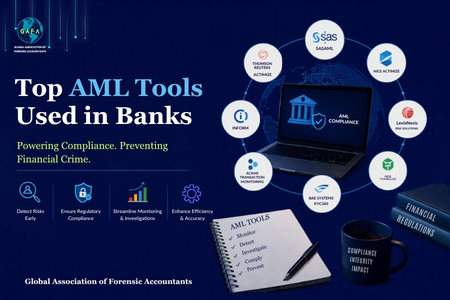
Top AML Tools Used in Banks
Here are some of the best AML tools widely used by banks and financial institutions:
1. Cascade (End-to-End AML Platform)
Cascade is a modern AML compliance platform designed for banks, funds, and regulated firms.
Key Features
- Centralized client registry
- Integrated name screening (PEPs, sanctions, media)
- Digital onboarding and document collection
- Risk assessment and scoring
- Audit-ready reporting
It acts as a complete AML control center, combining KYC, monitoring, and compliance in one system.
2. LexisNexis Risk Solutions
A widely used tool for sanctions screening and identity verification.
Key Features
- Global sanctions database
- Identity verification
- Fraud detection
- Risk intelligence
3. Refinitiv World-Check (LSEG)
One of the most trusted databases for screening high-risk individuals.
Key Features
- PEP and sanctions screening
- Risk intelligence data
- Real-time updates
4. Dow Jones Risk & Compliance
A powerful AML tool for risk and compliance teams.
Key Features
- Adverse media screening
- Sanctions and watchlist data
- Risk assessment tools
5. NICE Actimize
A leading AML monitoring tool used by global banks.
Key Features
- Transaction monitoring
- Fraud detection
- AI-based analytics
- Case management
Apply for the AML certification course
Key Features of the Best AML Tools
The best AML tools offer a combination of automation, intelligence, and compliance capabilities.
Must-Have Features
- Centralized data management
- Real-time monitoring
- Integration with global databases
- Risk-based approach (RBA)
- Automated alerts and reporting
- Audit trails
These features ensure that banks can manage compliance efficiently.
How AML Tools Work (Step-by-Step)
Understanding how AML tools operate can help businesses choose the right solution.
Step 1: Customer Onboarding
- Collect and verify customer data
- Perform KYC checks
Step 2: Risk Assessment
- Assign risk levels to customers
- Apply due diligence measures
Step 3: Monitoring
- Track transactions continuously
- Detect suspicious patterns
Step 4: Investigation
- Analyze flagged transactions
- Conduct detailed reviews
Step 5: Reporting
- File reports with authorities
- Maintain compliance records
This lifecycle ensures complete AML compliance.
Challenges Without AML Tools
Without proper AML tools, banks face several risks:
- Manual errors in compliance
- Slow onboarding processes
- Difficulty in detecting fraud
- Regulatory penalties
- Increased operational costs
AML tools help eliminate these challenges by automating processes.
Future Trends in AML Tools
The AML landscape is evolving with technology.
Emerging Trends
- AI and machine learning for fraud detection
- Real-time transaction monitoring
- Cloud-based AML platforms
- Automation of compliance workflows
- Integration with RegTech solutions
Banks adopting these technologies will have a competitive advantage.
Best anti-money laundering certification online
Conclusion
AML tools are essential for modern banks to ensure compliance, detect fraud, and protect financial systems. From KYC onboarding to transaction monitoring and investigation, these tools provide a complete framework for managing financial crime risks.
Choosing the right AML tool can help organizations:
- Improve efficiency
- Reduce compliance risks
- Enhance customer experience
As regulations continue to evolve, investing in advanced AML tools will be critical for long-term success.
FAQs
Q1. What are AML tools?
Answer: AML tools are software solutions used by banks to detect and prevent financial crimes through KYC verification, transaction monitoring, and risk assessment.
Q2. What are the best AML compliance tools?
Answer: Some of the best AML tools include Cascade, LexisNexis, Refinitiv World-Check, Dow Jones Risk & Compliance, and NICE Actimize.
Q3. What tools are used in AML?
Answer: AML tools include KYC tools, transaction monitoring tools, investigation tools, and compliance platforms.
Q4. What is an AML monitoring tool?
Answer: An AML monitoring tool tracks financial transactions and detects suspicious activity in real time.
Q5. What are AML KYC tools?
Answer: AML KYC tools are used to verify customer identity during onboarding and ensure compliance with regulations.
Q6. What is an AML testing tool?
Answer: AML testing tools are used to evaluate and validate the effectiveness of AML systems and compliance processes.
Q7. Why do banks use AML tools?
Answer: Banks use AML tools to prevent fraud, comply with regulations, and monitor financial transactions efficiently.