

Corporate fraud is evolving, so must corporate training. Financial fraud is no longer just some bookkeeping mismanagement or fake invoices. Modern fraud involves cyber-enabled scams, vendor collusion, insider fraud, AI-driven deception and cross-border crimes. To handle such complex nature of crimes, organizations are actively investing in corporate forensic accounting and fraud investigation training for employees.
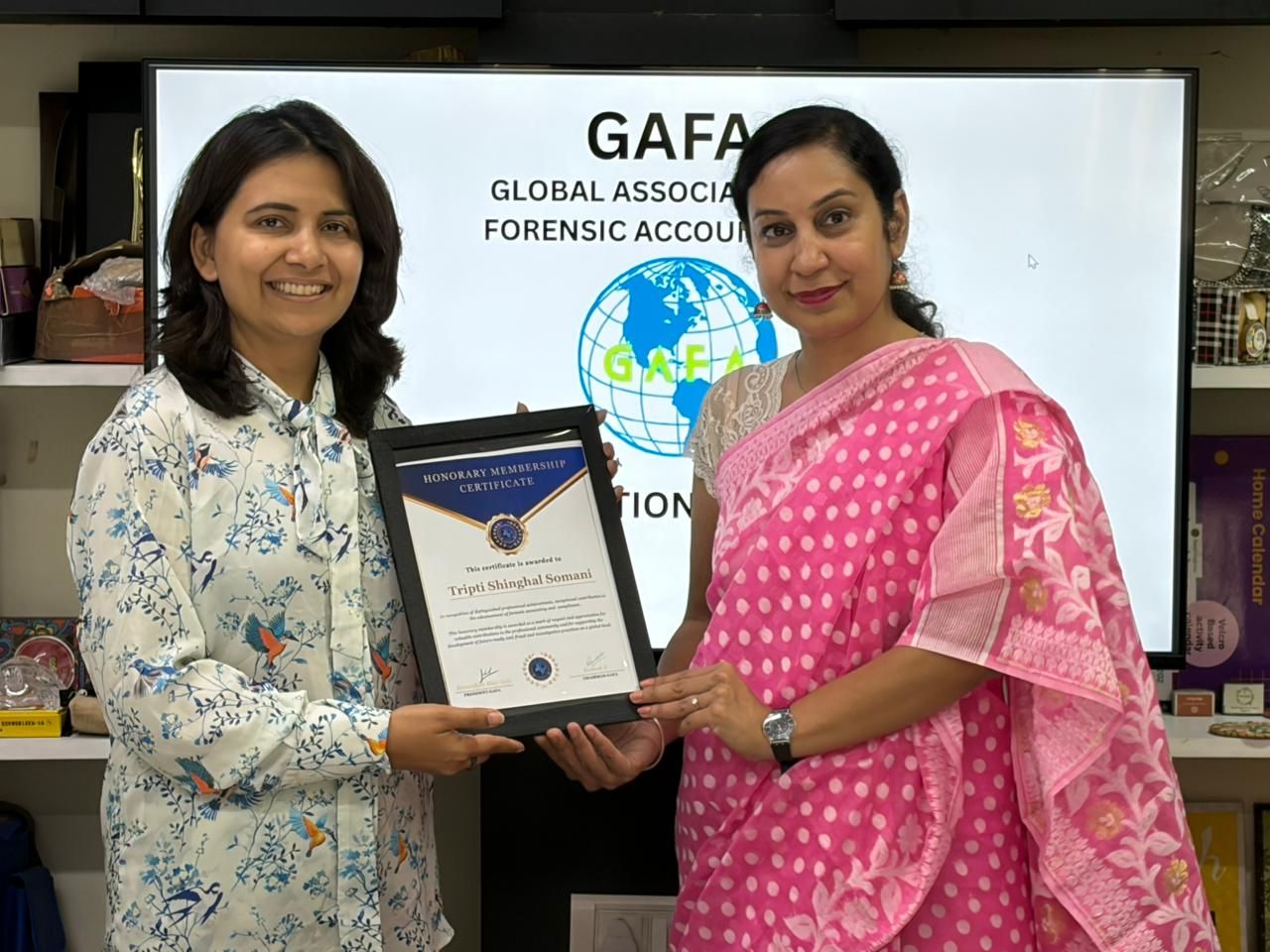
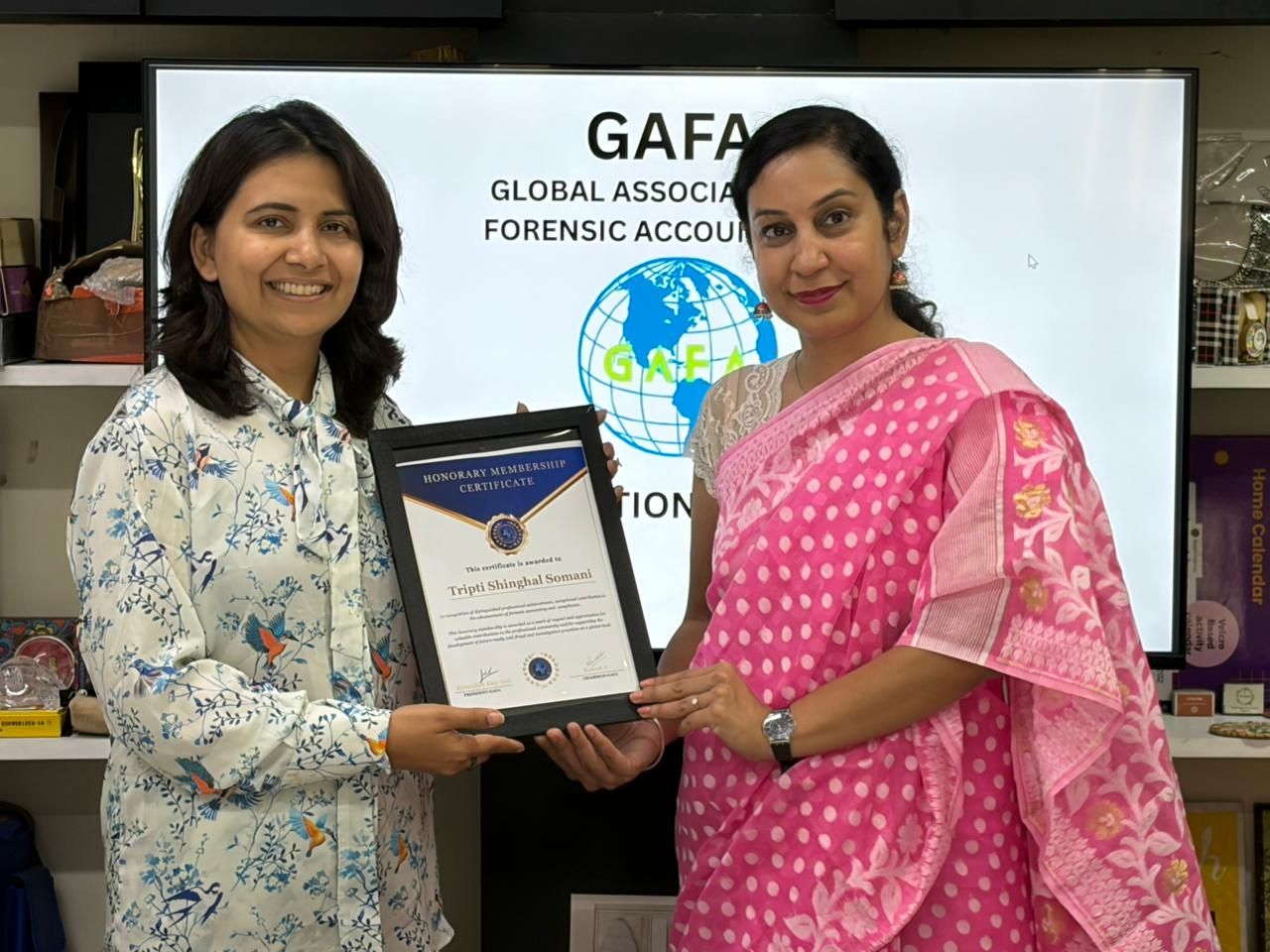
Recently the Global Association of Forensic Accountants (GAFA) conducted a corporate CFFI (Certification in Financial Fraud Investigation) for professionals at K G Somani & Co LLP. 100 employees underwent specialized fraud investigation training. This initiative sheds light on a larger industry shift. Companies are seeking financial professionals who can identify red flags early and investigate beyond the balance sheet.
The Rising Cost of Financial Fraud
The threat landscape of corporate fraud has changed over the past decade. Tax evasion is no more the biggest modus operandi. Now financial crimes are more layered and rather sophisticated in nature. They include digital payment fraud, procurement manipulation, shell company transactions, cryptocurrency-linked laundering, cyber-enabled accounting fraud, data tampering and insider financial misconduct.
The added layer of complex business makes these frauds harder to detect.
Companies operate across national borders and rely heavily on digital transactions and manage massive volumes of data online. In such circumstances, traditional audit methods fail to identify warning signs.
This is why forensic accounting has become increasingly important as it combines accounting knowledge with investigative thinking, legal understanding and analytic interpretation along with evidence handling.
Companies don’t need accountants who can run the numbers, they want trained individuals who can question patterns and identify inconsistencies. They should be able to investigate these suspicious activities before it escalates into a major financial risk.
Why Traditional Auditing Is No Longer Enough
Auditing and forensic investigation are not the same term used interchangeably, they serve completely different purposes. On one hand traditional auditing focuses on whether financial statements present an accurate view of an organization’s finances. Fraud investigation digs deeper, it uncovers patterns and uncovers the intent and identifies the misconduct.
Digital frauds keep advancing and fraudsters understand how compliance systems work and manipulate them strategically. Which is why organizations need employees who are professionally trained in technical accounting expertise and possess the investigative skill.
A specialized investigator should have advanced skills like Investigative methodologies, data analysis, legal defensibility, fraud risk assessment, evidence documentation. The most important reason organisations hire finance professionals is to proactively identify fraud indicators to prevent fraud. That mindset shift is driving companies toward structured certification programs.
The Corporate Shift Toward Fraud Investigation Training
Corporate organizations across industries are investing in upskilling the workforce, especially in areas connected to compliance, risk management and financial fraud.
It is no longer treated as an optional training and has become a part of organizational risk strategy.
The recent collaboration between GAFA and K G Somani & Co LLP for the CFFI program was attended by more than 100 employees from the organization . They underwent training as part of a corporate batch initiative. The initiative demonstrates how organizations are moving from isolated learning models to enterprise-wide capability building.
Companies are not just training senior auditors or compliance heads as fraud risks can emerge across departments. It is important to invest in broader employee readiness to avoid risk in future. This broader training approach creates a stronger organizational defense system.
Organizations that want to stay ahead of financial risk are actively investing in structured, practitioner-led training programs.
If your organization is looking to build similar in-house fraud investigation capabilities, GAFA’s corporate CFFI training programs are designed to upskill teams at scale with practical, real-world frameworks.
What Is CFFI?
The Certification in Financial Fraud Investigation (CFFI) is a specialized forensic accounting and fraud investigation certification developed by GAFA. The program focuses on practical fraud investigation methodologies, forensic audit techniques, financial crime analysis, and evidence-based investigative procedures.
The certification incorporates fraud risk assessment methodologies, real-world case studies, financial statement analysis, evidence handling protocols, forensic report writing, AI-powered fraud detection approaches, cross-border financial crime awareness. GAFA’s investigative frameworks aligns with global standards and the
emphasis is heavily practical rather than purely theoretical.
Practical orientation is very important as professionals who can apply investigative thinking in real business scenarios are better equipped than those who just understand compliance terminology.
Inside the GAFA Corporate Training Initiative
The recent corporate training initiative by GAFA involving K G Somani & Co LLP sheds light on the current shift happening in the accounting and finance industry.
In a LinkedIn post discussing the collaboration, the participants described the program as “niche, practical, and purposefully designed” to help chartered accountants strengthen expertise in forensic audits and real-world investigations.
The scale of this initiative stands out as training over 100 employees simultaneously suggests that organizations are getting ready to tackle financial fraud and not wait for it to happen. They are viewing this as a competency rather than an isolated specialist skill. Training more people in the organization has several strategic benefits
1. Stronger Fraud Awareness Across Teams
When all employees understand and analyse fraud patterns in the same way, the organization becomes more resilient. Suspicious activities are more likely to be identified early.
2. Better Risk Culture
Since all employees are trained and have professional skepticism, it will help them ask deeper questions in the face of the fraud instead of blindly accepting the process.
3. Improved Internal Coordination
Fraud investigation requires collaboration across departments like finance, legal, operations, compliance, and leadership teams. Shared training improves communication efficiency.
4. Reduced Financial Exposure
The most important factor of the training program is to avoid fraud by early detection and significantly reducing reputational damage and monetary loss.
5. Competitive Advantage
Clients increasingly prefer organizations with strong governance and forensic readiness capabilities.
Skills Modern Organizations Are Prioritizing
Financial Data Interpretation
Professionals should be able to analyze unusual transaction patterns, inconsistencies, and anomalies hidden within large datasets.
Fraud Risk Assessment
Employees should be capable of identifying vulnerabilities before misconduct occurs.
Evidence Documentation
Modern investigations should be backed with structured evidence collection and legally defensible reporting practices.
Digital Investigation Awareness
Financial crime has become more technology-driven and complex in nature, professionals should have familiarity with cybersecurity risks and digital evidence.
Investigative Communication
Writing clear forensic reports and presenting findings effectively is becoming a critical business skill.
Critical Thinking
Fraud investigation is fundamentally about asking better questions.
This is why many organizations are now prioritizing certifications and practical training modules rather than relying solely on traditional academic qualifications.
Professionals looking to transition into forensic accounting or strengthen their investigative edge can explore GAFA’s CFFI certification, which focuses on practical application rather than just theoretical understanding.
How Corporate Certifications Improve Organizational Culture
The impact of forensic investigation training goes beyond technical skill development.
It also influences organizational culture. Companies investing in fraud investigation training, communicate several important messages to both employees and competitors.
First and foremost they make it clear that ethical accountability matters in the organization. This encourages professional skepticism and makes it clear that learning and adaptability are valued. Importance to certifications indicates that governance is a priority and risk awareness is everyone’s responsibility.
This creates a stronger culture of transparency and vigilance within the organization.
Employees who understand how fraud works are often less likely to ignore warning signs or participate in unethical behavior.
The recent GAFA CFFI corporate batch training initiative involving more than 100 employees reflects a broader transformation taking place across the corporate world.
Organizations no longer see fraud investigation as a niche specialization relevant only after a crisis occurs. Instead, they increasingly view forensic accounting, investigative thinking, and fraud awareness as strategic business capabilities.
Organizations and professionals that invest early in forensic accounting capabilities, through structured certifications like GAFA’s CFFI, will be better positioned to detect, prevent, and respond to financial fraud in an increasingly uncertain risk environment.
FAQ’s
Q1. What is forensic accounting?
Answer:- Forensic accounting is a specialized field that combines accounting, investigation, auditing, and legal knowledge to identify and analyze financial fraud or misconduct.
Q2. What is CFFI certification?
Answer:- CFFI stands for Certification in Financial Fraud Investigation, a professional program focused on fraud detection, forensic investigation methodologies, evidence handling, and financial crime analysis.
Q3. Why are companies investing in fraud investigation training?
Answer:- Organizations are facing increasingly sophisticated financial fraud risks. Training employees helps improve fraud awareness, risk detection, compliance readiness, and governance standards.
Q4. Is forensic accounting a growing career field?
Answer:- Demand for forensic accounting professionals is increasing due to rising financial crime complexity, digital fraud risks, and stronger regulatory expectations.
Q5. How does forensic accounting differ from auditing?
Answer:- Auditing primarily checks financial accuracy and compliance, while forensic accounting investigates suspicious activity, identifies fraud patterns, and gathers evidence for potential legal action.
Q6. What skills are important in financial fraud investigation?
Answer:- Key skills include analytical thinking, fraud risk assessment, financial analysis, evidence handling, investigative communication, and digital investigation awareness.
Q7. Why are corporate batch certifications becoming popular?
Answer:- Organizations increasingly prefer training entire teams instead of isolated departments because fraud prevention requires company-wide awareness and collaboration.
Q8. Does forensic accounting involve technology?
Answer:- Yes. Modern forensic accounting uses data analytics, AI-assisted detection, digital evidence analysis, and transaction monitoring tools to identify suspicious financial behavior.