
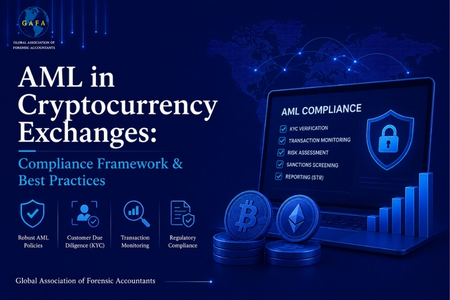
The rapid rise of cryptocurrency exchanges has transformed global finance, but it has also opened new doors for financial crimes. As digital assets become mainstream, regulators worldwide are tightening rules to prevent misuse. This makes AML cryptocurrency exchange compliance not just a regulatory requirement but a strategic necessity for long-term sustainability.
Cryptocurrency exchanges operate in a decentralized environment where anonymity and cross-border transactions are common. Without a robust Anti-Money Laundering (AML) framework, these platforms risk being exploited for illicit activities such as money laundering, terrorist financing, and fraud.
This guide outlines a practical compliance framework and best practices that cryptocurrency exchanges must adopt to stay compliant and build trust.
Understanding AML Cryptocurrency Exchange Compliance
AML compliance in crypto exchanges refers to the processes, policies, and technologies used to detect, prevent, and report suspicious financial activities.
Unlike traditional banks, crypto exchanges deal with pseudonymous transactions, making AML enforcement more complex. Regulatory bodies now expect exchanges to implement stringent measures similar to financial institutions.
Key Objectives of AML Compliance:
- Prevent illegal fund flows
- Identify suspicious transactions
- Ensure transparency in operations
- Comply with global regulatory standards
Failing to meet AML cryptocurrency exchange compliance standards can result in heavy penalties, reputational damage, or even shutdown.
Enroll the AML Certification
Regulatory Landscape for Cryptocurrency AML Compliance
The regulatory environment for cryptocurrencies is evolving rapidly. Governments and financial watchdogs are introducing frameworks to ensure accountability.
Major Global Regulations:
- FATF Travel Rule for crypto transactions
- KYC and AML mandates across jurisdictions
- Licensing requirements for exchanges
- Reporting obligations for suspicious activities
In India, regulatory clarity is still evolving, but exchanges are expected to follow strict AML and KYC norms aligned with global practices.
Why Compliance Matters:
- Builds user trust
- Enables global expansion
- Reduces legal risks
- Attracts institutional investors
Core Components of an AML Compliance Framework
A strong AML framework is the backbone of any cryptocurrency exchange. It should be structured, scalable, and adaptable to regulatory changes.
1. Know Your Customer (KYC) Procedures
KYC is the first step in AML cryptocurrency exchange compliance. It involves verifying the identity of users before allowing transactions.
Best Practices:
- Collect government-issued ID proof
- Implement biometric verification
- Use AI-based identity validation tools
- Conduct periodic re-verification
2. Customer Due Diligence (CDD) & Enhanced Due Diligence (EDD)
Not all users carry the same risk. Exchanges must categorize users based on risk levels.
CDD Includes:
- Basic identity verification
- Transaction monitoring
EDD Includes:
- Source of funds verification
- Monitoring high-risk users
- Additional documentation for large transactions
Learn About AML
3. Transaction Monitoring Systems
Real-time transaction monitoring is essential for detecting suspicious activities.
Key Features:
- Automated alerts for unusual patterns
- Monitoring high-value transactions
- Tracking wallet behaviors
- Integration with blockchain analytics tools
4. Suspicious Activity Reporting (SAR)
When suspicious behavior is detected, exchanges must report it to relevant authorities.
Important Elements:
- Timely reporting
- Detailed documentation
- Secure data storage
- Compliance with jurisdictional rules
5. Record Keeping & Audit Trails
Maintaining accurate records ensures transparency and helps during audits.
Requirements:
- Store user data securely
- Maintain transaction logs
- Keep records for a minimum regulatory period
- Enable easy retrieval during inspections
Best Practices for AML Cryptocurrency Exchange Compliance
To stay ahead of regulatory scrutiny, exchanges must go beyond basic compliance and adopt proactive strategies.
1. Implement Risk-Based Approach
A one-size-fits-all approach does not work in AML compliance. Exchanges should:
- Classify users based on risk levels
- Allocate resources accordingly
- Continuously update risk profiles
2. Leverage Advanced Technology
Technology plays a crucial role in strengthening AML frameworks.
Recommended Tools:
- Blockchain analytics platforms
- AI-driven fraud detection systems
- Automated compliance software
These tools enhance accuracy and reduce manual effort.
3. Continuous Employee Training
Human oversight remains critical. Regular training ensures staff can identify red flags and respond appropriately.
Training Focus Areas:
- AML regulations
- Fraud detection techniques
- Reporting procedures
4. Regular Compliance Audits
Periodic audits help identify gaps and improve processes.
Audit Benefits:
- Ensures regulatory adherence
- Detects vulnerabilities
- Improves operational efficiency
5. Strong Governance & Internal Controls
Leadership must prioritize compliance as a core function.
Key Actions:
- Appoint a compliance officer
- Establish clear policies
- Monitor compliance KPIs
- Ensure accountability at all levels
Buy Now AML Course
Challenges in AML Cryptocurrency Exchange Compliance
Despite advancements, exchanges face several challenges in implementing AML frameworks.
1. Anonymity of Transactions
Crypto wallets do not always reveal user identities, making tracking difficult.
2. Cross-Border Regulations
Different countries have different compliance requirements, creating complexity.
3. Rapid Technological Changes
New technologies and financial instruments emerge faster than regulations.
4. High Compliance Costs
Implementing advanced AML systems requires significant investment.
Future of AML in Cryptocurrency Exchanges
The future of AML cryptocurrency exchange compliance lies in increased collaboration between regulators and technology providers.
Emerging Trends:
- AI-driven compliance systems
- Global regulatory standardization
- Increased use of blockchain analytics
- Real-time monitoring frameworks
Exchanges that adopt these trends early will gain a competitive advantage.
Conclusion
AML compliance is no longer optional for cryptocurrency exchanges—it is essential for survival and growth. A well-structured AML framework not only ensures regulatory compliance but also builds credibility and trust among users.
By implementing robust KYC procedures, leveraging advanced technology, and adopting best practices, exchanges can effectively mitigate risks and operate sustainably in a highly regulated environment.
For organizations looking to build expertise in this domain, professional certifications and training programs offered by GAFA (Global Academy of Finance and Accounting) can provide the necessary knowledge and practical insights.
FAQs
Q1. What is AML cryptocurrency exchange compliance?
Answer: AML cryptocurrency exchange compliance refers to the policies and procedures implemented by crypto exchanges to prevent money laundering and financial crimes. It includes KYC verification, transaction monitoring, and reporting suspicious activities. These measures ensure that exchanges operate within legal frameworks and maintain transparency. Compliance helps protect users, builds trust, and prevents regulatory penalties, making it a critical component for any crypto trading platform.
Q2. Why is AML compliance important for crypto exchanges?
Answer: AML compliance is essential because cryptocurrency transactions can be exploited for illegal activities due to their pseudonymous nature. By implementing AML frameworks, exchanges can detect suspicious transactions, prevent fraud, and comply with regulations. This not only avoids legal penalties but also enhances credibility and user trust. Strong AML practices are crucial for long-term sustainability and global expansion of crypto exchanges.
Q3. What are the key components of an AML framework?
Answer: An AML framework includes KYC procedures, customer due diligence, transaction monitoring, suspicious activity reporting, and record-keeping. Each component plays a vital role in identifying and preventing financial crimes. Together, they create a structured approach to compliance, ensuring exchanges can detect risks early and respond effectively. A well-designed AML framework is essential for meeting regulatory requirements and maintaining operational integrity.
Q4. How do crypto exchanges monitor suspicious transactions?
Answer: Crypto exchanges use advanced tools like blockchain analytics and AI-based monitoring systems to track transactions. These systems analyze patterns, detect unusual behaviors, and generate alerts for suspicious activities. Exchanges also monitor high-value transactions and wallet activities. Once flagged, these transactions are reviewed and reported to authorities if necessary. This process ensures compliance and helps prevent financial crimes within the platform.
Q5. What are the challenges in AML cryptocurrency exchange compliance?
Answer: Challenges include transaction anonymity, varying global regulations, high implementation costs, and rapidly evolving technology. These factors make it difficult for exchanges to maintain consistent compliance. Additionally, the lack of standardized regulations across countries adds complexity. Despite these challenges, adopting advanced technology and a risk-based approach can help exchanges effectively manage AML requirements and stay compliant.