

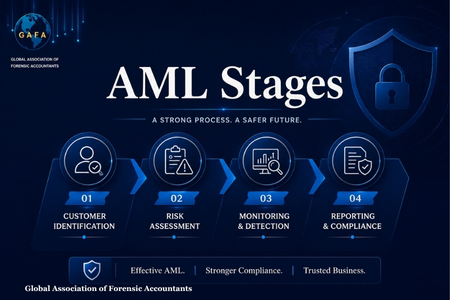
Money laundering remains one of the most complex financial crimes in today’s global economy. As financial systems become more digital, criminals are finding increasingly sophisticated ways to disguise illegal funds. Understanding the 3 stages of money laundering is essential for professionals in finance, compliance, and risk management.
In this guide, we break down each stage in a clear, practical way—with real-world examples—to help you understand how money laundering works and how it can be prevented.
What is Money Laundering?
Money laundering is the process of making illegally obtained money appear legitimate. Criminals attempt to hide the origin of funds generated through activities such as fraud, corruption, drug trafficking, or cybercrime.
The laundering process typically unfolds in three key stages:
- Placement
- Layering
- Integration
Each stage plays a critical role in disguising the illicit origin of funds.
Why Understanding AML Stages is Important
Before diving into the stages, it’s important to understand why this concept matters.
- Helps detect suspicious financial activity
- Supports compliance with AML regulations
- Reduces financial crime risks
- Essential knowledge for AML professionals
For organizations like GAFA, educating professionals on AML concepts is key to building a secure financial ecosystem.
Stage 1: Placement (Introducing Illegal Money into the System)
What is Placement in Money Laundering?
Placement is the first stage where illegally obtained money is introduced into the financial system. This is often the riskiest stage for criminals because the funds are closest to their illegal source.
Common Placement Techniques
- Depositing cash into bank accounts
- Structuring deposits (smurfing)
- Using cash-intensive businesses
- Purchasing high-value assets
Example of Placement
A drug trafficker deposits small amounts of cash into multiple bank accounts to avoid detection thresholds. This method is known as structuring.
SEO Keywords Used
- Placement stage of money laundering
- AML placement examples
- Money laundering process explained
Why Placement is High-Risk
Financial institutions are most likely to detect suspicious activity at this stage because:
- Transactions involve large volumes of cash
- Patterns may appear unusual
- Regulatory monitoring is strongest
Get Certified in Anti-Money Laundering
Stage 2: Layering (Concealing the Source of Funds)
What is Layering in Money Laundering?
Layering involves separating the illicit money from its source through a series of complex financial transactions. The goal is to create confusion and make tracing the origin difficult.
Common Layering Techniques
- Multiple bank transfers
- Offshore accounts
- Shell companies
- Cryptocurrency transactions
- Trade-based money laundering
Example of Layering
A criminal transfers money through several international accounts, converts it into cryptocurrency, and then reinvests it into different assets. These transactions make it difficult for authorities to track the origin.
SEO Keywords Used
- Layering stage of money laundering
- AML layering techniques
- Financial crime layering examples
Why Layering is Complex
Layering is considered the most sophisticated stage because:
- It involves multiple jurisdictions
- Transactions are intentionally complex
- Technology and digital assets increase anonymity
Stage 3: Integration (Making Money Appear Legitimate)
What is Integration in Money Laundering?
Integration is the final stage where laundered money is reintroduced into the economy as legitimate funds. At this point, it becomes extremely difficult to distinguish between legal and illegal money.
Common Integration Methods
- Investing in real estate
- Business investments
- Luxury asset purchases
- Fake loans or invoices
Example of Integration
A criminal uses laundered money to purchase a luxury hotel, which generates legitimate income. The illegal funds now appear clean.
SEO Keywords Used
- Integration stage of money laundering
- AML integration examples
- Final stage of money laundering
Why Integration is Hard to Detect
By this stage:
- Money appears legitimate
- Transactions resemble normal business activity
- Audit trails are often obscured
Real-Life Flow of the 3 Stages
To simplify, here’s how the process typically works:
- Placement: Cash enters the system through small deposits
- Layering: Funds are transferred across multiple accounts globally
- Integration: Money is invested into legal businesses
This cycle enables criminals to safely use illicit funds without raising suspicion.
Modern Trends in Money Laundering (2026)
Money laundering techniques are evolving rapidly. Here are some current trends:
1. Cryptocurrency Laundering
Digital currencies offer anonymity, making them a preferred tool for layering.
2. Trade-Based Money Laundering
Manipulating invoices and trade transactions to move money across borders.
3. Use of Shell Companies
Fake entities used to hide ownership and transaction trails.
4. Online Gaming & NFTs
Emerging platforms used to move and disguise funds.
Learn AML skills for banking & fintech
How AML Professionals Detect These Stages
AML professionals play a critical role in identifying suspicious activities across all stages.
Key Detection Methods
- Transaction monitoring systems
- Customer Due Diligence (CDD)
- Enhanced Due Diligence (EDD)
- Suspicious Activity Reports (SARs)
Skills Required
- Analytical thinking
- Regulatory knowledge
- Data interpretation
- Risk assessment
Importance of AML Training and Certification
Understanding the 3 stages of money laundering explained with examples is foundational for anyone pursuing a career in AML compliance.
Professional training helps you:
- Identify red flags effectively
- Understand global AML regulations
- Build a career in financial crime compliance
At GAFA, industry-focused AML certification programs are designed to prepare professionals for real-world challenges.
Conclusion
The 3 stages of money laundering placement, layering, and integration form the backbone of financial crime operations. Each stage serves a unique purpose in disguising illegal funds and making them appear legitimate.
By understanding these stages, businesses and professionals can:
- Strengthen compliance frameworks
- Detect suspicious activity early
- Reduce financial crime risks
As financial crimes become more advanced, knowledge and awareness remain the strongest defense.
FAQs
Q1. What are the 3 stages of money laundering?
Answer: The three stages of money laundering are placement, layering, and integration. Placement involves introducing illegal money into the financial system. Layering hides the origin through complex transactions. Integration allows the funds to re-enter the economy as legitimate money. These stages collectively help criminals disguise illicit funds. Understanding these stages is crucial for AML professionals to detect and prevent financial crimes effectively in banks, fintech companies, and regulatory environments.
Q2. Why is the placement stage considered risky for criminals?
Answer: The placement stage is the riskiest because illegal funds are closest to their origin and easiest to detect. Large cash deposits or unusual transactions can trigger alerts in banking systems. Financial institutions have strict monitoring systems to identify suspicious activities at this stage. If detected early, authorities can trace the money back to criminal sources, making it difficult for offenders to proceed with further laundering stages like layering or integration.
Q3. How does layering make money laundering difficult to trace?
Answer: Layering involves multiple complex transactions designed to obscure the origin of funds. Criminals may transfer money across various accounts, countries, or financial instruments like cryptocurrencies. These transactions create confusion and break the audit trail. The use of shell companies and offshore accounts further complicates tracking. As a result, it becomes challenging for authorities to identify the source of funds, making layering the most sophisticated stage of money laundering.
Q4. What is an example of integration in money laundering?
Answer: Integration occurs when laundered money is reintroduced into the economy as legitimate income. For example, a criminal may invest illegal funds in real estate or a business. The income generated from these investments appears legal. At this stage, the money blends seamlessly with legitimate financial activities, making detection extremely difficult. Integration allows criminals to use their funds freely without raising suspicion from financial institutions or regulatory authorities.
Q5. How can AML professionals detect money laundering stages?
Answer: AML professionals use tools like transaction monitoring systems, customer due diligence, and suspicious activity reporting to detect laundering activities. They analyze transaction patterns, identify unusual behaviors, and investigate high-risk accounts. Advanced technologies like AI and data analytics also support detection. Continuous training and knowledge of AML regulations help professionals stay updated. Early detection at the placement or layering stage significantly improves the chances of preventing financial crimes.