
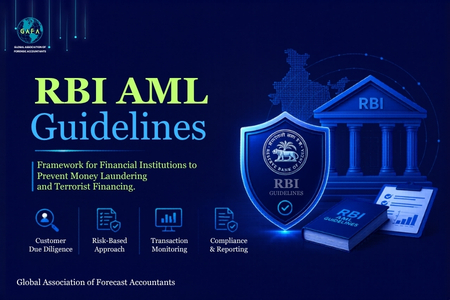
The RBI AML Guidelines Every Banker Must Know form the backbone of financial integrity in India. Issued by the Reserve Bank of India, these regulations aim to prevent money laundering, terrorist financing, and financial fraud across banking and financial institutions.
In a rapidly digitizing economy, financial crimes have evolved significantly. Banks are no longer just custodians of funds they are frontline defenders against illicit financial activities. This is where AML (Anti-Money Laundering) guidelines become critical. These frameworks ensure transparency, accountability, and compliance while safeguarding the financial system.
For institutions like GAFA, understanding and implementing these guidelines is not just about regulatory compliance it’s about building trust and long-term sustainability.
What Are RBI AML Guidelines?
The RBI AML guidelines are a set of regulatory instructions aligned with India’s Prevention of Money Laundering Act (PMLA). These guidelines require banks and financial institutions to:
- Identify customers through robust KYC processes
- Monitor transactions for suspicious activities
- Report unusual patterns to regulatory authorities
- Maintain proper records for audit and compliance
The core objective is simple: detect and prevent illegal financial activities before they escalate.
Enroll in CAML Certification Now
Importance of RBI AML Guidelines in Banking
Strengthening Financial Security
AML guidelines act as a shield against financial crimes such as fraud, corruption, and terror financing. They ensure that banks do not become channels for illegal money flow.
Regulatory Compliance
Non-compliance can lead to heavy penalties, reputational damage, and even license cancellation. RBI mandates strict adherence to AML norms.
Enhancing Customer Trust
When customers know that their bank follows stringent AML practices, it builds confidence and credibility.
Supporting Global Standards
RBI AML regulations align with global frameworks such as FATF (Financial Action Task Force), ensuring India remains compliant with international standards.
Key Components of RBI AML Guidelines
1. Customer Due Diligence (CDD)
Customer Due Diligence is the first step in AML compliance. Banks must verify the identity of customers before onboarding them.
Key Elements:
- Identity verification (Aadhaar, PAN, Passport)
- Address verification
- Risk profiling
CDD ensures that banks know who they are dealing with, reducing the chances of fraudulent activities.
2. Know Your Customer (KYC) Norms
KYC is a fundamental pillar of RBI AML guidelines. It involves collecting and verifying customer information to establish authenticity.
Types of KYC:
- Simplified KYC
- Full KYC
- e-KYC
Banks must periodically update KYC records to ensure accuracy and compliance.
3. Risk-Based Approach (RBA)
RBI emphasizes a risk-based approach to AML compliance. Not all customers carry the same level of risk.
Risk Categories:
- Low Risk: Salaried individuals with stable income
- Medium Risk: Small business owners
- High Risk: Politically exposed persons (PEPs), non-residents
Banks must allocate resources based on risk levels, ensuring high-risk accounts receive more scrutiny.
4. Transaction Monitoring
Continuous monitoring of transactions is essential to detect suspicious activities.
Examples of Red Flags:
- Unusual large cash deposits
- Frequent international transfers
- Transactions inconsistent with customer profile
Advanced analytics and AI tools are increasingly used to enhance monitoring efficiency.
5. Suspicious Transaction Reporting (STR)
Banks are required to report suspicious transactions to the Financial Intelligence Unit (FIU-IND).
Key Points:
- Reports must be filed promptly
- No disclosure to the customer (tipping-off is prohibited)
- Includes attempted transactions
STR plays a crucial role in preventing financial crimes at an early stage.
6. Record Keeping Requirements
RBI mandates banks to maintain records of transactions and customer data for a specified period.
Retention Period:
- Minimum 5 years after transaction completion
- Ensures audit readiness and regulatory compliance
Proper documentation is essential for investigations and audits.
Get CAML Certified with AI-Powered Training
RBI AML Compliance Best Practices
Implement Strong Internal Controls
Banks must establish clear policies, procedures, and controls to ensure AML compliance.
Employee Training and Awareness
Regular training programs help employees identify suspicious activities and understand regulatory requirements.
Use of Technology
AI-driven tools and automation enhance transaction monitoring and risk assessment.
Periodic Audits
Internal and external audits ensure compliance gaps are identified and addressed promptly.
Collaboration with Regulators
Maintaining open communication with regulatory bodies helps in staying updated with evolving guidelines.
Challenges in Implementing RBI AML Guidelines
Increasing Complexity of Financial Crimes
Cyber fraud and digital transactions have made AML compliance more challenging.
Data Management Issues
Handling large volumes of customer and transaction data requires robust systems.
Regulatory Changes
Frequent updates in AML guidelines require continuous adaptation.
Resource Constraints
Smaller financial institutions may struggle with implementing advanced AML systems.
Despite these challenges, adopting a proactive approach can significantly improve compliance efficiency.
Role of Technology in AML Compliance
Technology has become a game-changer in AML compliance.
Artificial Intelligence (AI)
AI helps in identifying patterns and anomalies in transactions.
Machine Learning
ML models improve detection accuracy over time.
Blockchain
Enhances transparency and traceability in financial transactions.
Automation
Reduces manual effort and minimizes errors.
For organizations like GAFA, leveraging technology is essential to stay ahead in AML compliance.
Penalties for Non-Compliance
Failure to comply with RBI AML guidelines can lead to:
- Heavy monetary penalties
- Legal actions
- Loss of banking license
- Reputational damage
Recent enforcement actions highlight RBI’s strict stance on AML compliance. Banks must treat AML as a priority rather than a regulatory burden.
Future of AML Regulations in India
The future of AML compliance in India is driven by:
- Increased use of AI and data analytics
- Stronger regulatory frameworks
- Greater international collaboration
- Focus on digital banking security
Banks must stay agile and continuously update their AML strategies to remain compliant.
Conclusion
The RBI AML Guidelines Every Banker Must Know are not just regulatory requirements they are essential tools for maintaining financial integrity and trust. From KYC norms to transaction monitoring and reporting, every aspect of AML compliance plays a critical role in safeguarding the banking ecosystem.
For organizations like GAFA, adopting a proactive and technology-driven approach to AML compliance ensures not only regulatory adherence but also long-term success in a competitive financial landscape.
FAQs
Q1. What are RBI AML guidelines and why are they important?
Answer: RBI AML guidelines are regulatory frameworks issued to prevent money laundering and financial crimes in India. They require banks to verify customer identities, monitor transactions, and report suspicious activities. These guidelines are crucial for maintaining financial stability, preventing illegal fund flows, and ensuring compliance with global standards. For bankers, understanding these rules helps avoid penalties and strengthens institutional credibility while protecting customers and the financial system.
Q2. What is the role of KYC in RBI AML guidelines?
Answer: KYC (Know Your Customer) is a key component of RBI AML guidelines. It involves verifying customer identity and address before onboarding them. KYC helps banks understand customer profiles and detect unusual activities. It reduces the risk of fraud, identity theft, and money laundering. Regular updates of KYC data ensure accuracy and compliance. Without proper KYC, banks may unknowingly facilitate illegal transactions, making it a critical compliance requirement.
Q3. What is a Suspicious Transaction Report (STR)?
Answer: A Suspicious Transaction Report (STR) is a report filed by banks when they detect unusual or potentially illegal financial activities. These reports are submitted to the Financial Intelligence Unit (FIU-IND). STRs include transactions that do not match a customer’s profile or involve large, unexplained fund movements. Filing STRs is mandatory under RBI AML guidelines, and banks must ensure confidentiality to avoid alerting the customer involved.
Q4. How does the risk-based approach work in AML compliance?
Answer: The risk-based approach (RBA) categorizes customers based on their risk levels—low, medium, or high. Banks allocate resources accordingly, focusing more on high-risk customers such as politically exposed persons (PEPs) or non-residents. This approach ensures efficient use of resources and enhances monitoring effectiveness. By identifying high-risk profiles early, banks can prevent potential money laundering activities and maintain compliance with RBI AML guidelines.
Q5. What are the penalties for non-compliance with RBI AML guidelines?
Answer: Non-compliance with RBI AML guidelines can result in severe consequences, including heavy fines, legal action, and reputational damage. In extreme cases, banks may face restrictions or loss of their operating license. Regulatory authorities conduct regular audits to ensure adherence. Failure to comply not only affects the institution financially but also erodes customer trust. Therefore, banks must prioritize AML compliance and implement strong internal controls to avoid such risks.