

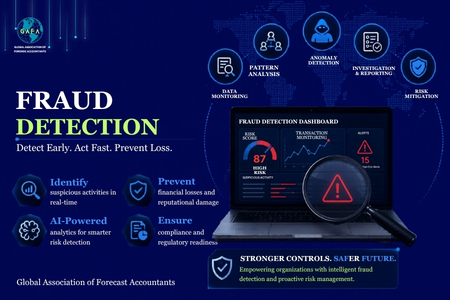
In today’s rapidly evolving financial ecosystem, fraud is no longer a rare occurrence it’s a persistent and sophisticated threat. From digital payments to cross-border transactions, organizations face increasing pressure to identify suspicious activities in real time. This is where AML fraud detection techniques play a crucial role.
This guide explores AML Fraud Detection Techniques Explained in a practical, business-focused way helping you understand how modern systems work, why they matter, and how companies like GAFA empower professionals and organizations to stay ahead of financial crime.
What is Fraud Detection in AML?
Fraud detection in Anti-Money Laundering (AML) refers to the process of identifying suspicious financial activities that may indicate illegal transactions. It combines data analysis, regulatory frameworks, and advanced technologies to detect patterns that deviate from normal behavior.
Businesses today are not just expected to detect fraud they are expected to prevent it proactively.
Key Objectives of AML Fraud Detection
- Identify suspicious transactions early
- Prevent money laundering and financial crimes
- Ensure compliance with regulatory standards
- Protect brand reputation and customer trust
Enroll in CAML Certification Now
Why AML Fraud Detection is Critical in 2026
With digital transformation accelerating across industries, fraudsters are becoming more innovative. Traditional detection systems are no longer sufficient.
Emerging Challenges
- Increase in real-time digital transactions
- Complex global financial networks
- Rise of AI-driven fraud tactics
- Regulatory pressure across regions
Organizations that fail to implement strong AML fraud detection techniques risk financial loss, regulatory penalties, and reputational damage.
Top AML Fraud Detection Techniques Explained
Let’s break down the most effective techniques used today.
1. Rule-Based Transaction Monitoring
This is one of the oldest and most widely used methods in AML fraud detection.
How it works:
Predefined rules are set to flag suspicious activities, such as:
- Large transactions beyond a threshold
- Frequent transfers within a short time
- Transactions in high-risk jurisdictions
Advantages:
- Easy to implement
- Transparent decision-making
Limitations:
- High false positives
- Limited adaptability
2. Machine Learning & AI-Based Detection
Modern fraud detection relies heavily on artificial intelligence.
How it works:
Machine learning models analyze historical transaction data to identify unusual patterns and predict potential fraud.
Benefits:
- Learns and adapts over time
- Reduces false positives
- Detects complex fraud patterns
Use Case Example: AI can detect subtle behavioral changes, like a sudden spike in transaction frequency from a previously inactive account.
3. Behavioral Analytics
Behavioral analytics focuses on understanding user behavior rather than just transaction values.
Key Indicators:
- Login patterns
- Device usage
- Transaction timing
If a user suddenly logs in from a new location and initiates large transactions, the system flags it as suspicious.
4. Network Analysis
Fraud often involves networks rather than individuals.
How it works:
This technique maps relationships between accounts to identify hidden connections.
Example:
- Multiple accounts transferring funds to a single entity
- Circular transactions among linked accounts
Network analysis is especially useful in uncovering organized fraud rings.
5. Real-Time Monitoring Systems
Speed is critical in fraud detection.
Why it matters:
- Fraud transactions happen in seconds
- Delayed detection leads to higher losses
Real-time systems monitor transactions instantly and trigger alerts or block suspicious activities.
6. Risk Scoring Models
Each transaction or customer is assigned a risk score based on predefined criteria.
Factors considered:
- Transaction amount
- Geographic location
- Customer profile
- Historical behavior
Higher risk scores trigger further investigation or automated actions.
7. Data Integration & Big Data Analytics
Fraud detection becomes more powerful when multiple data sources are combined.
Data Sources Include:
- Transaction history
- Customer KYC data
- External watchlists
- Social and behavioral data
Big data analytics enables organizations to process massive datasets and uncover hidden fraud patterns.
Best Practices for Effective AML Fraud Detection
Implementing techniques is not enough execution matters.
1. Combine Multiple Techniques
Relying on a single method increases risk. A hybrid approach ensures better accuracy.
2. Regularly Update Rules and Models
Fraud patterns evolve quickly. Systems must adapt continuously.
3. Invest in Skilled Professionals
Technology alone cannot solve fraud. Skilled analysts play a crucial role.
4. Ensure Regulatory Compliance
Align your fraud detection systems with global AML regulations.
5. Focus on Customer Experience
Overly strict systems can frustrate genuine users. Balance security with usability.
Get CAML Certified with AI-Powered Training
Common Challenges in Fraud Detection
Even advanced systems face limitations.
High False Positives
Too many alerts can overwhelm teams and reduce efficiency.
Data Quality Issues
Incomplete or inaccurate data leads to poor detection.
Integration Complexity
Combining multiple systems can be technically challenging.
Cost of Implementation
Advanced AI systems require significant investment.
Future of AML Fraud Detection
The future of fraud detection is driven by innovation.
Key Trends to Watch
- AI-powered predictive analytics
- Blockchain-based transaction monitoring
- Advanced identity verification systems
- Automated compliance solutions
Organizations that adopt these technologies early will have a competitive advantage.
How GAFA Helps You Master AML Fraud Detection
At GAFA, we focus on bridging the gap between theory and real-world application.
What You Gain:
- Industry-relevant AML training
- Hands-on experience with fraud detection tools
- Exposure to real case studies
- Career-oriented certification programs
Whether you’re a beginner or a professional, GAFA equips you with the skills needed to succeed in financial crime prevention.
Upgrade Your Career in AML Today
Conclusion
Understanding AML Fraud Detection Techniques Explained is no longer optional it’s essential for businesses and professionals alike. With fraud becoming more sophisticated, organizations must adopt advanced detection techniques, invest in skilled talent, and continuously evolve their strategies.
By combining technology, analytics, and human expertise, you can build a strong defense against financial crime.
FAQs
Q1. What are AML fraud detection techniques?
Answer: AML fraud detection techniques are methods used to identify suspicious financial activities and prevent money laundering. These techniques include rule-based monitoring, machine learning models, behavioral analytics, and real-time transaction tracking. They help organizations detect unusual patterns, flag high-risk transactions, and ensure compliance with financial regulations. By using a combination of these techniques, businesses can significantly reduce fraud risks and improve their overall security systems.
Q2. How does AI improve fraud detection in AML?
Answer: AI enhances fraud detection by analyzing large volumes of data and identifying patterns that traditional systems may miss. It learns from historical data, adapts to new fraud trends, and reduces false positives. AI can detect subtle anomalies in user behavior, making it highly effective in preventing sophisticated fraud attempts. This makes AML systems more accurate, efficient, and capable of handling complex financial environments.
Q3. Why is real-time monitoring important in fraud detection?
Answer: Real-time monitoring allows organizations to detect and respond to fraudulent activities instantly. Since financial transactions happen within seconds, delayed detection can lead to significant losses. Real-time systems analyze transactions as they occur and trigger alerts or block suspicious activities immediately. This proactive approach helps minimize risks, protect customer assets, and maintain trust in financial systems.
Q4. What challenges do companies face in AML fraud detection?
Answer: Companies often face challenges such as high false positives, data quality issues, integration complexities, and high implementation costs. Managing large volumes of alerts can overwhelm teams, while inaccurate data can lead to missed fraud cases. Additionally, integrating advanced technologies with existing systems requires technical expertise. Overcoming these challenges requires a combination of technology, skilled professionals, and continuous system optimization.
Q5. How can professionals build a career in AML fraud detection?
Answer: A career in AML fraud detection requires knowledge of financial regulations, data analysis, and fraud detection tools. Professionals can start by gaining certifications, learning about AML frameworks, and developing analytical skills. Hands-on training and real-world case studies are essential for practical understanding. Institutes like GAFA provide industry-focused training programs that help individuals build strong careers in financial crime prevention.