

Certification in Financial Fraud Investigation (CFFI)
The Certified Financial Fraud Investigator (CFFI) is a professional certification in financial fraud investigation, forensic accounting, fraud risk management, and corporate investigations. Developed by the Global Association of Forensic Accountants (GAFA), the certification prepares professionals to detect, investigate, and prevent financial fraud across industries.
Designed for professionals in forensic accounting, internal audit, banking, compliance, risk management, financial services, law enforcement, and corporate investigations, CFFI helps build practical investigation skills required to address today’s evolving financial crime challenges.
How CFFI helps your career?
As per sources, Organizations worldwide lose more than US$5 trillion to fraud annually. As a result, demand for skilled fraud investigators has increased across banking, financial services, insurance, consulting, fintech, and corporate sectors.
Employers are actively seeking professionals who can investigate fraud, identify financial irregularities, analyze complex transactions, and strengthen fraud risk management frameworks.
CFFI provides the knowledge, practical skills, and professional credibility needed to succeed in the rapidly growing field of financial fraud investigation.
The certification covers globally accepted fraud investigation concepts, including the Fraud Triangle, Fraud Diamond, COSO Internal Control Framework, Benford’s Law, fund flow analysis, financial statement analysis, documentary evidence examination, fraud interviewing, link analysis, and digital evidence handling. These concepts are integrated with GAFA’s Financial Fraud Investigation Methodology (G-FIM) to provide a structured, practical approach to planning investigations, analysing evidence, establishing facts, and preparing professional investigation reports.
Note: You will be redirected to our secure LMS website- Kapp Edge to complete your purchase.
Certification in Financial Fraud Investigation -CFFI
First 100 certification Distribution
Felicitation Ceremony




CFFI Advantages for you
₹7.2 lacs
of average frauds related losss to Insurance industry pushes the demand of professionals with the specialized skills.
CFFI combines internationally accepted fraud investigation frameworks with practical investigative techniques across the following domains:
Foundations of Financial Fraud Investigation and Forensic Accounting
Data Analytics and AI in Fraud Investigation
Fraud Detection and Prevention Tools-Lab Training
World's first forensic Standard-Forensic Accounting and Investigation Standards (FAIS)
Global Case Studies and Capstone Investigation
Investigation Reports, Expert Opinion and Courtroom Readiness
How do I earn CFFI Credentials?
Prepare for the exam
GAFA offers the flexibility to choose the learning approach that best suits your professional schedule and study preferences.
Our self-study resources are designed for professionals who prefer to learn independently and progress at their own pace.
GAFA Live is customised for participants who value live interaction, structured learning, and the discipline of regular classroom-style sessions guided by experienced faculty.
Choose the learning experience that works best for you.
CFFI Study Resources

CFFI Self Study Resources 2026
Prepare with the CIIP handbook and study at your own pace, , with the flexibility to learn anytime, anywhere.

CFFI Live Training
Prepare for the CFFI certification through instructor led -live training sessions, along with advanced AML tool access and hands-on practical training.
(Virtual and Physical batches)
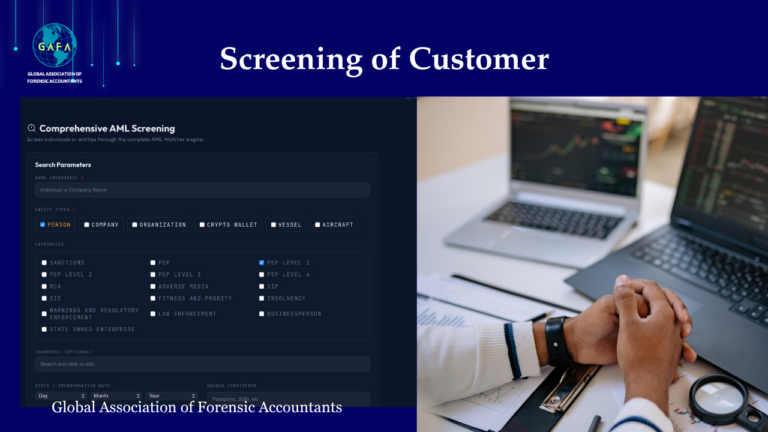
AI powered Investigation Tools
Fraud Investigation Tools
With GAFA’s insurance investigation tools and technology-driven training, participants learn how to identify suspicious claims, analyze claim patterns, detect fraud indicators, and verify supporting documents.
The training also covers digital investigation practices, claim risk assessment, case management methodologies, open-source intelligence (OSINT), fraud detection analytics, and the application of AI-driven investigative approaches to support real-world insurance fraud investigations, claims validation, and fraud prevention efforts.
AI Powered Tools by GAFA
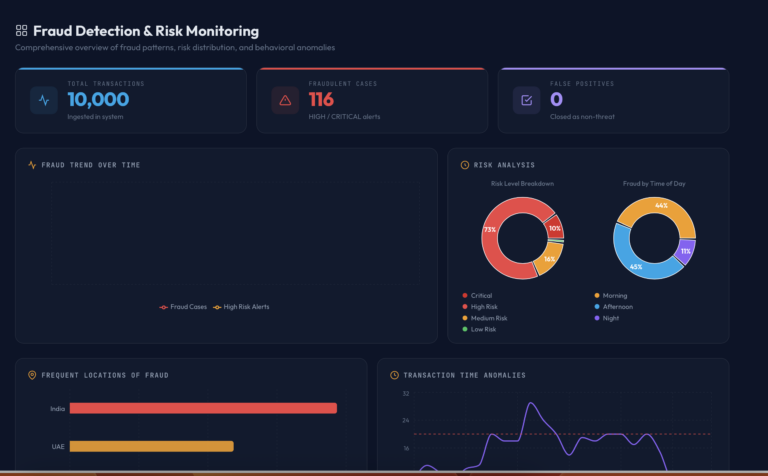
Come.. experience yourself!
Global Association of Forensic Accountants upholds the highest standards of integrity, professionalism, and confidentiality across its certification and training programs.
All examinations are conducted through monitored and proctored assessment processes to ensure credibility, fairness, and global quality standards.
With the valued support of Mercer Mettl, GAFA continues to strengthen secure learning environments, professional excellence, and industry-focused certification delivery for candidates and organizations worldwide.

CFFI Faculties
Kanwaljeet Kaur Soni
Noby Bakshi
Poonam Singh
Guest Faculty
Are you ready to take big leap in Career?
Certification in Financial Fraud Investigation could be your launch pad.
Certification in Financial Fraud Investigation - Fee and Class Schedule
CFFI Exam Fee | CFFI-Live Session Fee | GAFA Annual Membership Fee |
|---|---|---|
USD 299 | USD 100 | USD 30 |
INR 28000 | INR 9000 | INR 2700 |
CFFI Live Classes-Schedule and Features
Training Schedule
- Mode: Online Live Sessions
- Frequency: Weekend
- Recording Access: Available for enrolled participants
Program Features
- Live instructor-led online /physical classes
- Practical Investigation tools exposure
- Real-world Global case studies
- Proctored certification examination
Frequently Asked Questions (FAQs)
What is the Certified Financial Fraud Investigator (CFFI) certification?
The Certified Financial Fraud Investigator (CFFI) is a professional certification offered by the Global Association of Forensic Accountants (GAFA). It is designed to develop practical expertise in financial fraud investigation, Forensic Audits , forensic accounting and fraud risk management, through industry-relevant learning, case studies, and real-world investigation techniques.
Who should enroll in the CFFI certification?
CFFI is suitable for forensic accountants, chartered accountants, internal auditors, banking professionals, compliance officers, risk managers, fraud investigators, law enforcement officers, finance professionals, and graduates who want to build a career in financial fraud investigation and forensic accounting.
What practical skills will I learn in the CFFI certification?
The CFFI certification covers
Professional Skills & Investigation Techniques Covered
AI-Assisted Financial Fraud Investigation
Cryptocurrency & Blockchain Transaction Analysis
Data Analytics for Fraud Detection (Python, SQL & Power BI)
Digital Forensics & Electronic Evidence Analysis
Financial Intelligence & Open-Source Intelligence (OSINT)
Fund Flow Analysis & Money Trail Reconstruction
Link Analysis & Network Relationship Mapping
Financial Statement Fraud Investigation
Fraud Interviewing & Investigation Report Writing
GAFA Financial Fraud Investigation Methodology (G-FIM)
How can the CFFI certification support my career?
CFFI helps professionals build practical investigation skills that are valued across financial institutions. It helps in:
- Getting career boost in Big 4’s and financial institutions
- Working in Global Banks with practical knowledge on Global investigation frameworks.
- Getting Consulting assignments in financial fraud investigation.
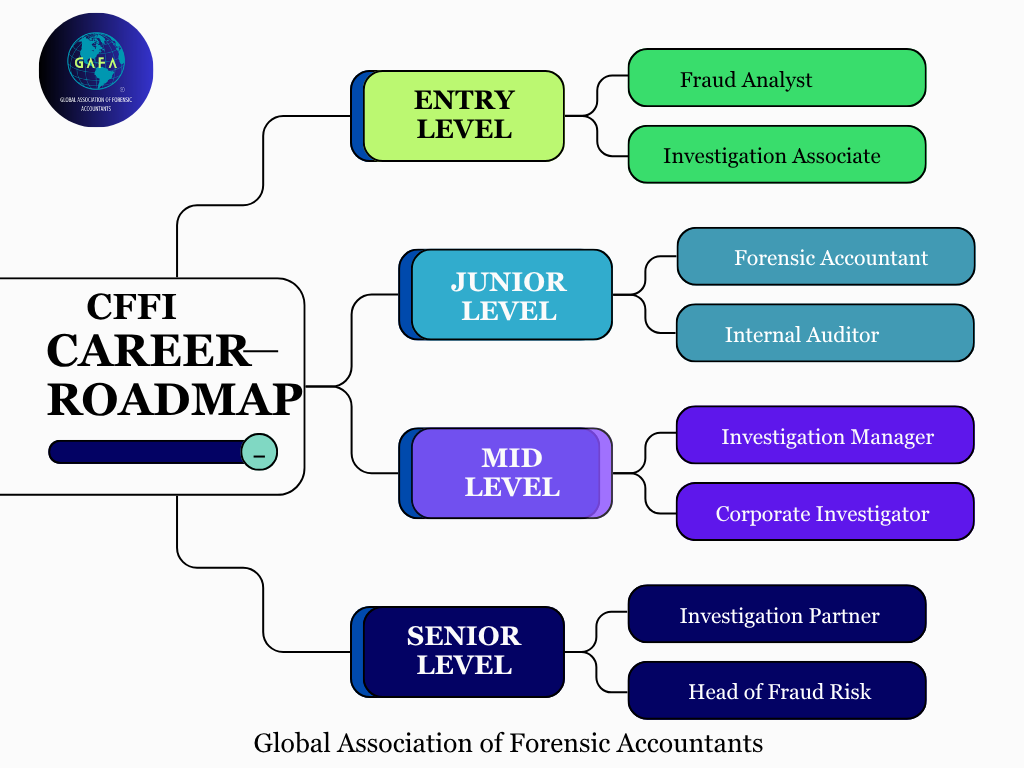
What is career pathway after CFFI?
CFFI complements career progression into specialist investigation, fraud risk, forensic advisory, and leadership roles. For graduates, it also provides a strong foundation for advanced studies and careers in financial crime and forensic accounting.
Graduate / Final-Year Student
↓
Earn the CFFI Certification
↓
Develop Practical Fraud Investigation Skills
↓
Higher Studies or Entry-Level Opportunities
↓
Build a Career in Financial Fraud Investigation
Financial fraud is becoming more sophisticated every year. As you move towards digital payments online banking and automated financial system fraudsters are also finding new ways to exploit vulnerabilities. From identity theft and fake invoices to money laundering and cyber scams, financial crimes can cause a lot of losses to businesses, banks and even individuals. This is the only reason why financial fraud investigation has become one of the fastest growing fields in finance and risk management. It’s all about identifying suspicious financial activities, collecting evidence, analyzing transactions and helping organizations prevent future fraud. Financial fraud investigators play a very important role in protecting businesses and maintaining compilers.
Understanding financial crimes and fraud risks
Financial crime is any illegal activity that involves money, financial assets or even financial institutions. While some fraud schemes are simple others involve complex networks that can operate across different countries. Today’s organizations face both internal and external fraud risks. Some of the most common financial crimes include identity theft insurance fraud loan fraud investment scams and even tax evasion. Besides financial losses, fraud can even damage your company’s reputation or customer trust. This is the only reason why you must invest heavily in fraud prevention and investigation as a company.
Who is a financial fraud investigator?
A financial fraud investigator is actually a professional who examines suspicious financial activities to determine whether fraud has occurred. If you are a financial fraud investigator your job is to not just identify missing money but also analyze financial records, interview relevant individuals and gather evidence. Depending on the organization you might work in banks, insurance companies, financial institutions or government agencies. A typical day might involve reviewing transaction records, analyzing unusual payment patterns and verifying documents. As fraud methods keep changing you must constantly update your knowledge of financial regulations technology and investigation techniques.
Financial fraud investigation process explained
Identifying suspicious activity
Investigation basically begins when unusual transactions or financial behaviour is detected. This could include unexpected fund transfers, fake invoices or authorized transactions. Sometimes all these activities are identified through internal audits while other times automated fraud detection systems generate alerts.
Collecting information
After identifying suspicious activity you need to gather all the relevant documents like bank statement accounting records emails contracts and payment methods.
Analyzing financial data
You need to carefully examine financial records to identify patterns. You can compare transactions, verify supporting documents, trace the movement of funds and determine whether company policies or legal regulators have been violated.
Conducting interviews
Employees, customers , vendors or even witnesses might be interviewed to understand what happened. These interviews often provide your valuable information that financial records alone cannot reveal.
Preparing investigation reports
Finally you need to prepare details in reports including what happened, how the fraud occurred and the financial impact. These reports are often shared with senior management auditors and regulators.
Financial fraud investigation techniques and methodologies
Successful investigations rely on proven techniques rather than just assumptions. Every conclusion must be supported by evidence. You can use transaction analysis. Here you review financial transactions to identify unusual spending patterns or duplicate payments or hidden relationships between accounts. You can also go for document verification where you verify invoices purchases orders receipts contract records to understand inconsistencies or signs of forgery. Furthermore you can look at trend analysis where you understand the historical financial data and detect unusual changes in revenue or expenses.
Financial forensic and fraud investigation
Financial forensic combines accounting auditing investigation and legal knowledge to uncover financial misconduct. It is different from regular accounting as forensic accounting focuses on identifying evidence that can be presented in court. Financial forensic experts often investigate corporate fraud, shareholder disputes, asset misappropriation and bankruptcy fraud. Forensic experts not only determine whether fraud occurred but also explain how it happened in order to estimate the financial damage.
Career Opportunities in Financial Fraud Investigation
Financial fraud investigation is no longer limited to banks. Today, almost every industry requires professionals who can identify and prevent financial crimes.
Job Role | Industry |
Financial Fraud Investigator | Banking & Financial Services |
Fraud Analyst | FinTech |
AML Analyst | Banking |
Risk Analyst | Corporate Organizations |
Compliance Officer | Financial Institutions |
Forensic Accountant | Audit & Consulting |
Financial Crime Specialist | Government & Regulatory Bodies |
Internal Auditor | Corporate Sector |
Types of financial fraud cases
Banking fraud involves bank accounts, loans online banking or unauthorized transactions. Corporate fraud is all about financial statement manipulation, fake vendors and procurement. Fraudsters might promise unrealistic returns through investment schemes. Insurance fraud is all about where businesses submit false claims or exceed losses to receive higher compensation.
How to investigate financial fraud effectively?
A successful fraud investigation is based on facts and not assumptions. You should never jump to conclusions. Every finding must be supported by evidence. Financial documents, digital records and electronic devices should be protected to avoid tampering. Fraud investigations often involve sensitive financial information confidentiality protects both organizations and the integrity of the investigation. Evidence collected improperly might not be accepted during legal proceedings, you need to follow applicable laws and company policies.
Banking and corporate fraud investigation
Banks and corporations handle millions of financial transactions every day making them attractive targets for fraudsters. Bank fraud investigation and world loan fraud account takeover credit card fraud online banking fraud and insider fraud. Corporate investigations often focus on employee fraud, financial statement fraud, procurement fraud besides vendor fraud.
Cyber enabled financial fraud investigation
As a lot of businesses rely on digital platforms, financial fraud has also evolved. Today many fraud cases involve technology banking cyber enabled financial fraud one of the fastest growing concerns for organizations globally. Cyber enabled financial fraud includes crimes like phishing attacks, online banking fraud, business e-mail compromise identity theft and cryptocurrency scams.
Anti money laundering and financial crime compliance
Money laundering is a process of disguising illegally obtained money to make it appear legitimate. Financial institutions are legally required to detect and report suspicious activities that might indicate money laundering or terrorist financing. This is exactly where anti money laundering plays a very important role. You can help organizations monitor suspicious transactions, conduct customer diligence and perform lower customer verification. Fraud investigators like you often work alongside AML teams because financial fraud and money laundering are closely connected.
Role of AI and technology in fraud investigation
Technology has transformed the way financial fraud is detected and investigated. Instead of reviewing thousands of transactions manually you can now use AI to identify suspicious patterns. AI can analyze large amounts of financial data and identify unusual activities that might indicate fraud. Data analytics help you identify hidden relationships, unusual transaction patterns and high risk activities.
So in short you can say that financial fraud is becoming more complex making skilled investigators more valuable than ever. Organizations need experts like you who can identify suspicious activities, analyse financial data, investigate fraud and support compliance efforts. A certificate in financial fraud management equips you with practical knowledge and industry-relevant skills needed to grow in this field.