

Certification in Anti Money Laundering (CAML)

The Financial Crime Landscape is Changing in 2026
“Money laundering has evolved far beyond cash transactions. Criminal networks now exploit digital payments, cryptocurrencies, shell companies, mule accounts, Trade Based Money Laundering, AI-generated identities, and cross-border financial systems.
Organizations need professionals who can recognize these evolving risks, investigate suspicious activity, and support effective compliance.”
Anti-money laundering (AML) refers to the laws, regulations, controls, and investigative practices designed to prevent criminals from disguising the proceeds of crime as legitimate funds.
- Lifetime Access
- 1 Year Exam License
- Official Study Manual
- Official Online Training
- Official CAML Prep Review Course
Note: You will be redirected to our secure LMS website- Kapp Edge to complete your purchase.
Playlist



Why Choose the CAML Certification?
CAML Curriculum
CAML Advantages for you
30%
CAML covers the Global Anti Money Laundering frameworks and focuses on the following domains:

Global AML Frameworks-FATF, FinCEN, FCA
Crypto Based AML Techniques
Country Specific Sections on AML Regulatory requirements and Compliance
Hands on training on AI Enabled AML Tools
Cyber Enabled Financial Crime-How to catch Red flags
Trade Based Money Laundering with AI powered Tools
How do I earn CAML Credentials?
Prepare for the exam
GAFA offers the flexibility to choose the learning approach that best suits your professional schedule and study preferences.
Our self-study resources are designed for professionals who prefer to learn independently and progress at their own pace.
GAFA Live is customised for participants who value live interaction, structured learning, and the discipline of regular classroom-style sessions guided by experienced faculty.
Choose the learning experience that works best for you.
CAML Study Resources

CAML Self Study Resources 2026
Prepare with the CAML handbook and study at your own pace, , with the flexibility to learn anytime, anywhere.

CAML Live Training
Prepare for the CAML certification through instructor led -live training sessions, along with advanced AML tool access and hands-on practical training.
(Virtual and Physical batches)
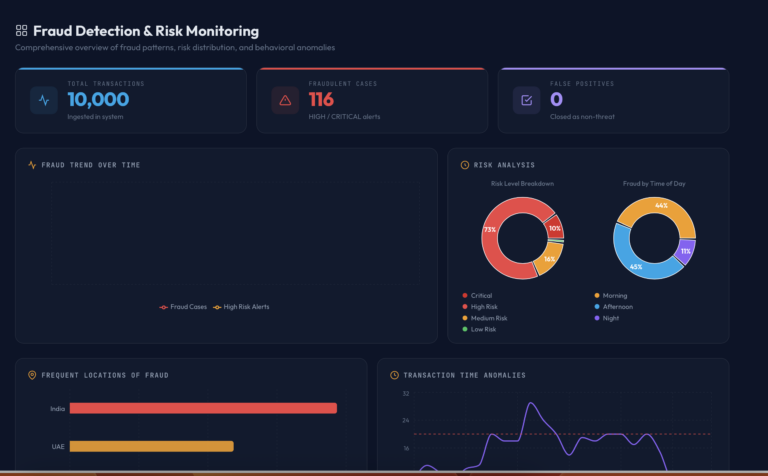
AI powered Anti Money Laundering Tools
Anti Money Laundering Tools
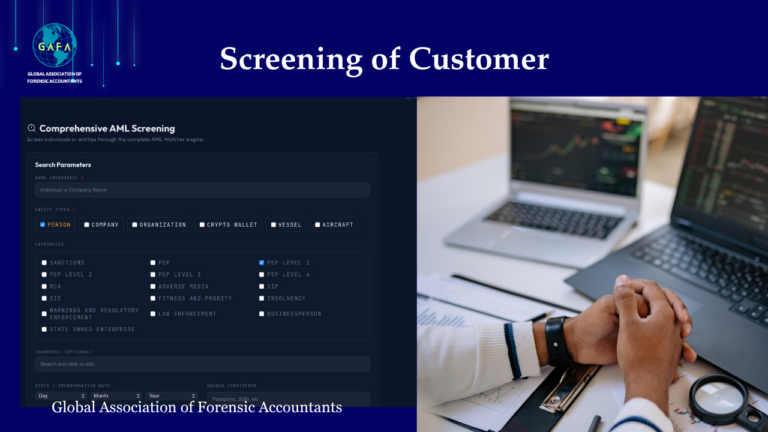
With GAFA’s AML tools, participants learn how to identify suspicious transactions, analyze banking patterns, conduct customer and UBO profiling, perform sanctions and watchlist screening, trace layered fund movements, and detect potential money laundering indicators through data analytics and intelligence tools.
The training also covers case management practices, transaction monitoring concepts, risk-based analysis, open-source intelligence (OSINT), and the use of AI-driven investigative approaches to support real-world AML compliance and financial crime investigations.
AI Powered Tools by GAFA
Come.. experience yourself!
Global Association of Forensic Accountants upholds the highest standards of integrity, professionalism, and confidentiality across its certification and training programs.
All examinations are conducted through monitored and proctored assessment processes to ensure credibility, fairness, and global quality standards.
With the valued support of Mercer Mettl, GAFA continues to strengthen secure learning environments, professional excellence, and industry-focused certification delivery for candidates and organizations worldwide.


CAML Faculties
Kanwaljeet Kaur Soni
Ramakrishna Susarla
Anupam Tyagi
Guest Faculty
Are you ready to take big leap in Career?
Certification in Anti Money Laundering could be your launch pad.
Anti-Money Laundering Certification - Fee and Class Schedule
CAML Exam Fee | CAML-Live Session Fee | GAFA Annual Membership Fee |
|---|---|---|
USD 399 | USD 100 | USD 30 |
INR 36000 | INR 9000 | INR 2700 |
CAML Live Classes-Schedule and Features
Training Schedule
- Mode: Online Live Sessions
- Frequency: Weekend
- Recording Access: Available for enrolled participants
- Current Batch-Ongoing till June 30th , 2026
Program Features
- Live instructor-led online /physical classes
- Practical AML tools exposure
- Real-world case studies from India and global jurisdictions
- Access to GAFA AML investigation methodologies
- Proctored certification examination
Frequently Asked Questions (FAQs)
How CAML badge can boost your career?
The CAML badge showcases your practical expertise in anti-money laundering and financial crime investigations. It helps strengthen your professional profile for AML, compliance, banking, fintech, and financial crime roles.
As employers increasingly look for professionals who can apply AML concepts in real-world situations—not just understand the regulations—CAML focuses on building practical, job-ready skills that support career growth in India and international markets.
Who should pursue the CAML certification?
CAML is suitable for professionals from any field and aspiring candidates in:
Banking and financial services
Risk and compliance roles
Audit and forensic accounting
Law enforcement and investigation
FinTech and cryptocurrency sectors
Students aiming to build a career in financial crime compliance
What are the key topics covered in CAML?
The CAML curriculum typically includes:
Fundamentals of money laundering and its stages
Current Methods and typologies (including trade-based laundering, Hawala, crypto misuse)
Anti-Money Laundering (AML) regulations and global frameworks
Customer Due Diligence (CDD) and Enhanced Due Diligence (EDD)
Suspicious Transaction Reporting (STR) filing procedure
Use of AI and Machine Learning in AML
AML Investigation techniques with data analytics
- FATF Guidelines
What is the role of technology in CAML training?
Modern CAML programs emphasize:
AI-driven transaction monitoring systems
Machine learning-based anomaly detection
Automation in KYC and risk scoring
Data analytics for fraud detection
How is CAML different from other AML certifications?
GAFA’s CAML focuses on:
Practical, real-world case studies rather than purely theoretical learning
Integration of emerging risks such as cryptocurrency and cyber-enabled laundering
Application of AI/ML tools in AML monitoring
Industry-relevant skills aligned with current regulatory expectations
- Special focus on. Indian AML compliances PMLA
What career opportunities are available after CAML?
After completing CAML, candidates can explore roles such as:
AML Analyst
Compliance Officer
Financial Crime Investigator
Risk Manager
KYC/EDD Specialist
Fraud Head
These roles exist across banks, NBFCs, regulatory bodies, consulting firms, and global financial institutions.
Is prior experience required to enroll in CAML?
CAML requires 2 years of relevant experience. For beginners with an interest in financial crime and risk management, there is a separate entry system .
Is CAML globally recognized?
Yes. The CAML certification offered by Global Association of Forensic Accountants is designed in alignment with international AML standards issued by the Financial Action Task Force (FATF).
This ensures that the concepts, frameworks, and investigative approaches taught are applicable across multiple jurisdictions, making the certification relevant for global roles in banking, compliance, fintech, and financial crime investigation.
GAFA’s CAML is widely valued for its practical, industry-focused approach and its alignment with evolving global AML practices.
Money laundering is one of the biggest challenges faced by financial institutions and businesses globally. Criminals today use sophisticated methods to hide illegally obtained money and make it appear legitimate. To deal with these activities organizations have to rely on anti money laundering professionals who understand regulations and risk assessment techniques. A certified in anti money laundering certification designed to equip you with practical knowledge and skills needed to identify suspicious activities and some financial crimes. Whether you are a banking professional or a risk manager or just someone looking to build a career in financial crime prevention this certification can greatly enhance your expertise.
What is anti money laundering?
Anti money laundering refers to a set of laws and procedures designed to prevent criminals from disguising criminally obtained funds as legitimate income. The framework helps organizations detect, investigate and also report suspicious financial activities.
Why is AML important in financial institutions?
financial institutions handle millions of transactions every day making them a common target for money laundering activities. Without effective AML controls criminals can exploit your banking systems or move illegal funds across borders and financial networks. The program helps the financial institutions get suspicious transactions early and prevent financial crimes and fraud.
Understanding anti money laundering compliance
The compiling involves implementing policies, procedures and controls that help organizations identify and mitigate money. The programs are also designed to ensure that institutions follow all the laws and regulatory requirements.
A robust AML compliance framework typically includes:
- Customer identification and verification
- Risk assessment procedures
- Transaction monitoring systems
- Employee training programs
- Suspicious activity reporting mechanisms
- Independent audits and reviews
Organizations that fail to comply with AML regulations can face significant financial penalties, legal consequences, and reputational damage.
Anti money laundering process explained
The process follows a structured approach to identify and prevent suspicious financial activities.
The process generally includes:
- Customer onboarding and identity verification
- Customer risk assessment
- Ongoing transaction monitoring
- Detection of unusual activities
- Investigation of suspicious transactions
- Filing regulatory reports when required
- Maintaining records and documentation
Stages of money laundering
The initial stage is placement where illegally obtained funds are introduced in the financial system. Criminals might deposit cash into the bank account or use various financial instruments to conceal the source of funds. Layering happens after replacement. Multiple transactions are conducted to obscure the origin of the money which may be transferred across multiple accounts or countries. The final stage is integration that occurs when laundered money reenters the economy as seemingly legitimate funds through investments or asset purchase.
Types of anti money laundering activities
The activities include a wide range of preventive and investigative measures designed to reduce financial crime risks.
Common AML activities include:
- Customer Due Diligence (CDD)
- Enhanced Due Diligence (EDD)
- Know Your Customer (KYC) verification
- Transaction monitoring
- Sanctions screening
- Politically Exposed Person (PEP) screening
- Suspicious Activity Reporting (SAR)
- Risk assessment and profiling
- Internal audits and compliance reviews
These activities work together to create a comprehensive defense against financial crime.
AML and KYC: main differences and importance
KYC focuses on verifying your customer identity and understanding customer profiles before establishing a business relationship. AML is a broader framework that includes KYC along with ongoing monitoring and risk management. Together both of them help you create a strong foundation for financial crime prevention.
AML Tools, Technologies & AI-Based Monitoring
Technology has transformed the way organizations manage AML compliance.
Modern AML solutions use advanced technologies such as:
- Artificial Intelligence (AI)
- Machine Learning (ML)
- Data Analytics
- Automated Transaction Monitoring
- Network Analysis
- Behavioral Analytics
Risk assessment in AML investigations
The risk assessment is basically a fundamental part of any AML program. Organizations need to identify and evaluate the risk associated with customers and products. Some main factors include customer occupation and business activities, transaction patterns, source of funds and industry sector. A risk approach helps organizations allocate resources effectively and also focus on high risk areas.
Transaction Monitoring and Suspicious Activity Reporting
Transaction monitoring involves continuously reviewing your customer transactions to identify unusual or suspicious activity. When suspicious activities are detected you need to file suspicious activity reports with the relevant regulatory authorities. As a professional you play a very important role 3rd in analyzing alerts and conducting investigations.
Customer due diligence and enhanced due diligence
Customer due diligence is the process of gathering and verifying information about your customers to understand the risk profiles. Customer due diligence includes identity verification, address verification and source of funds evaluation. Enhanced due diligence is applied to higher risk customers like politically exposed people or high net individuals.
Who Should Enroll in This AML Certification?
This certification is suitable for both experienced professionals and newcomers interested in financial crime compliance.
Ideal participants include:
- Banking professionals
- Compliance officers
- Risk management professionals
- Internal auditors
- Financial analysts
- Legal professionals
- Fintech employees
- Graduates seeking compliance careers
No matter your experience level, the certification provides practical knowledge that can be applied immediately in professional environments.
Career opportunities in AML and finance crime Compliance
Demand for AML professionals continues to grow as regulatory requirements become more stringent globally. You can become AML analyst compliance officer KYC analyst or risk management specialist besides fraud prevention analyst. When you have recognized AML certifications you can enjoy stronger career path and increase credibility
Skills You Will Learn in This AML certification
By completing the CAML certification, participants will develop valuable skills, including:
- AML compliance management
- Risk assessment techniques
- Transaction monitoring
- Suspicious activity detection
- Customer due diligence procedures
- Regulatory reporting
- Financial crime investigation
- AML technology utilization
- Regulatory framework understanding
So above all you need to know that after completing the training program you are required to pass a certification examination that evaluates your understanding of AML principles and regulations. In today’s highly regulated financial environment AML expertise is more valuable than ever before. Earning a certification not only strengthens your professional profile but also prepares you to play a very important role in protecting organizations and financial systems from money laundering and other financial crimes.