

Financial fraud can impact corporations of all sizes in today’s business environment. Financial irregularities can be tricky to detect—from fabricated transactions and misreported accounts to mismanagement and asset embezzlements. This is where the importance of forensic accounting lies. It emphasizes accounting, auditing, financial analysis and investigative skills, and involves an investigation of financial data and the identification of any misdeeds.
Specialized skills can lead to other career paths for professionals in the field of fraud investigation and financial crime. In addition to having knowledge of forensic accounting, there are also other qualifications that can be pursued, like the CFE (Certified Forensic Examination) certificate, which is more geared towards fraud prevention, detection, and investigation.
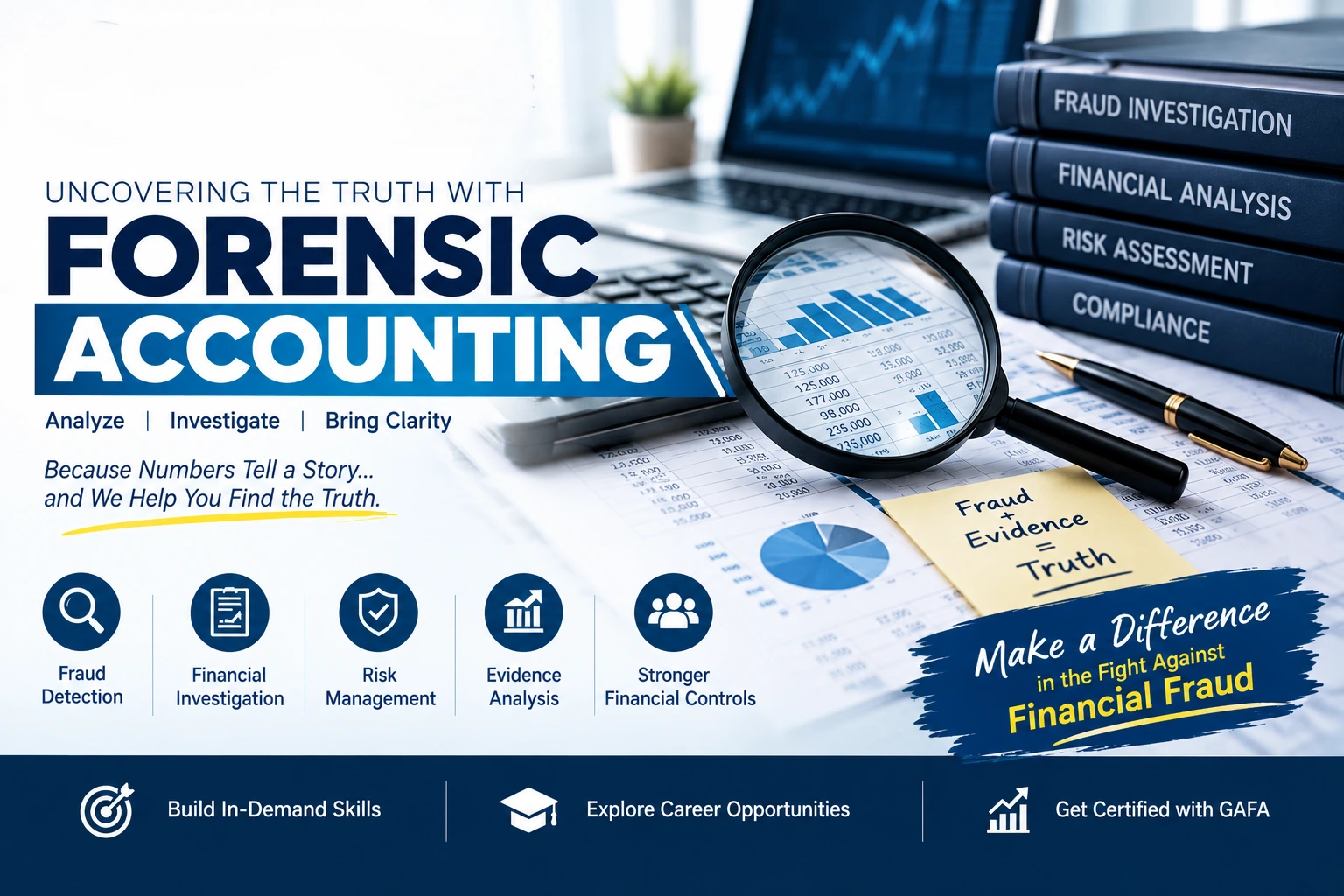
What does Forensic Accounting mean?
Forensic Accounting is an accounting specialty that focuses on the analysis of financial details in the investigation. A forensic accountant examines transactions to see beyond only the regular financial statements, is able to detect any inconsistencies, and searches for financial evidence and can trace money.
Forensic accounting is investigative accounting in contrast to traditional accounting which maintains a focus on recording and reporting financial information. Bank statements, invoices, contracts, accounting records, emails, transaction histories and more may be viewed to gain a better understanding of what occurred during the time of any suspected financial irregularity.
The results can aid in internal investigations, business conflicts, fraud investigations, regulatory issues and other financial investigations.
Why is Forensic Accounting important?
Financial fraud doesn’t just result in monetary losses. It can be detrimental to an organization’s reputation, contribute to customer distrust, pose compliance issues, and have an impact on future business activities.
Organizations can use structured financial analysis to help them investigate these risks, using a tool known as forensic accounting. Financial analysts may review suspicious activity, look for clues to the source of fraud, and assist companies in understanding the financial acts and possible ways they might have occurred.
It may be helpful in certain contexts like investigating corporate fraud, employee fraud, insurance claims, financial disputes, asset tracing and other financial investigations with monetary related data.
So What is a Forensic Accountant?
The job description of a forensic accountant can differ depending on the investigation and organisation. But some basic tasks are checking financial records, reviewing transactions, tracking money, detecting irregularities, compiling reports and financial documentation.
A forensic accountant could also collaborate with auditors, legal representatives, compliance departments, investigators, management or government bodies. Financial detail is important as is the ability to think analytically, as inconsistencies, no matter how small, in financial records can have an impact during investigations.
Communication is a second important attribute. An expert might have to describe intricate monetary revelations to the business leaders, legal representatives, or other stakeholders.
What is CFE Certification?
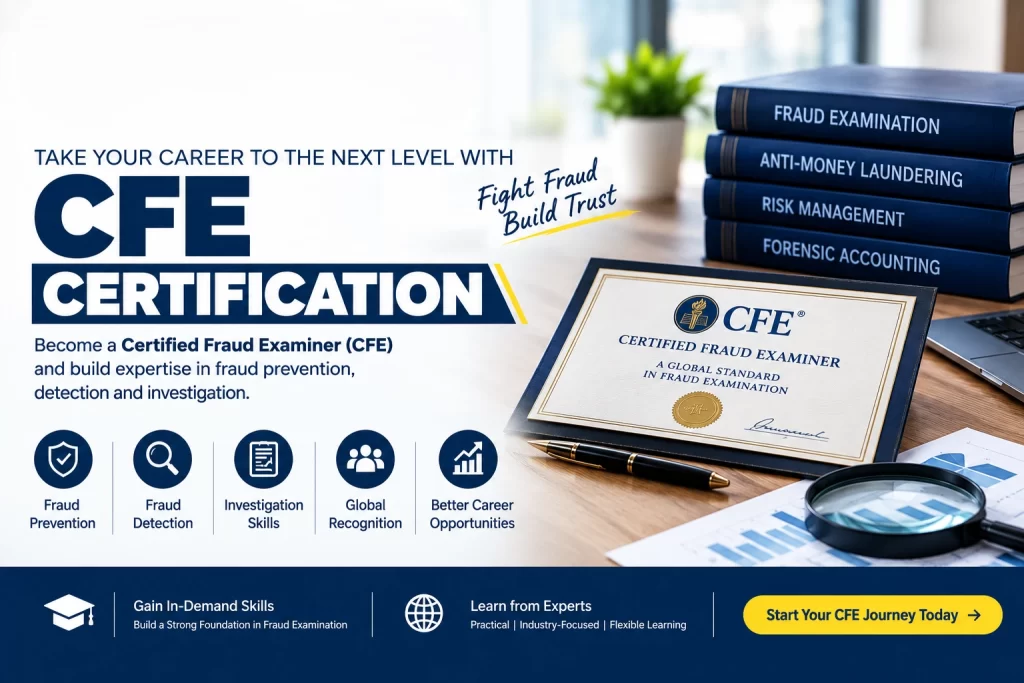
CFE stands for Certified Fraud Examiner, the credential of the Association of Certified Fraud Examiners (ACFE). It’s aimed at professionals seeking to build their knowledge and skills in fraud prevention, detection, investigation and other related fields.
CFE knowledge can be applied to those who work in the field of accounting, auditing, compliance, risk management or fraud investigations. It can assist students in comprehending various facets of fraud examination and the use of a systematic method to a fraud investigation.
If you are involved in forensic accounting, you will find it useful to also have an understanding of fraud examination, as it can offer you a different angle on catching financial crimes.
How Forensic Accounting and CFE Certification Go Hand-in-Hand Study Guide.How Forensic Accounting and CFE Certification Go Hand-in-Hand Study Guide.
Although forensic accounting and CFE certification are not the same thing, they can complement each other.
Forensic accounting’s emphasis is primarily on financial analysis and investigative accounting skills, and fraud examination is concerned with a larger number of areas of fraud prevention, detection, investigation, and response. If you are working within both industries, you can take a look at financial fraud from many angles.
A forensic accountant said to be conducting a suspicious activity investigation, for instance, needs to have some knowledge of the nature of fraud schemes and what should be reviewed for evidence; how financial data can be used to gain insight into the facts of the investigation.
This mix of skills can be applied to jobs that require financial investigations, internal controls, fraud risk, compliance and corporate investigations.
Building Forensic Accounting Skills With GAFA
The Global Association of Forensic Accountants (GAFA) is dedicated to educational issues, including forensic accounting, fraud investigation, financial crime, anti-money laundering and investigative related disciplines.
Specialized training may be available for students who are interested in working in forensic accounting and can provide hands-on skills and experience in financial analysis, fraud detection, investigative techniques, evidence collection and reporting. GAFA offers learning experiences for both students and professionals seeking to expand their knowledge and understanding of forensic accounting and financial investigations.
Structured forensic accounting education coupled with meaningful career development—specifically, knowledge of fraud examination relevant to the financial investigation field—can provide a wider skill set to those learning accounting.
Career Opportunities in Forensic Accounting
The forensic accounting field could have several career applications. Forensic accountant, forensic auditor, internal auditor, financial crime investigator, compliance professional, and fraud investigator are among the other positions a forensic accounting graduate can pursue, depending on their qualifications and experience.
The need for careers differs from employer to employer and location to location, so the professionals should think about the level of qualifications, experience, technical skills needed for their desired career.
It’s also a continuous learning process, as fraud tactics and financial systems continue to evolve on the online.
Conclusion
Forensic accounting has a significant role to play in the comprehension of financial irregularities, investigation of suspected fraud and examination of financial evidence. It blends accounting skills with the skills of investigation, and is an area of specialization for those with an interest in financial investigations.
Concurrently, if a person already has solid skills in financial investigation, CFE certification can afford him or her a centerpiece of knowledge that can be in the field of fraud examination. To grow an expertise in this field, you can see on-line learning platforms that provide knowledge about forensic accounting, fraud investigation, and financial crime.
Through education, hands-on experience and ongoing professional learning, people can be ready for the diverse future of financial investigation.
Frequently Asked Questions
1. What is forensic accounting?
Forensic accounting is a specialized field. It combines accounting, auditing, and investigative skills. Professionals use it to analyze financial transactions and uncover fraud or money-related irregularities.
2. What is the job of a forensic accountant?
A forensic accountant reviews financial records and looks for unusual transactions. They trace the flow of money and examine evidence closely. Finally, they prepare reports that support financial investigations or legal disputes.
3. What is CFE certification?
CFE stands for Certified Fraud Examiner. This professional credential focuses on four key areas: fraud prevention, detection, investigation, and examination.
4. Can CFE certification complement forensic accounting?
Yes, it can. Forensic accounting focuses on financial analysis and investigation. CFE, on the other hand, zeroes in on fraud examination. Together, these two credentials build a well-rounded skill set for fighting financial fraud.
5. What career opportunities are available in forensic accounting?
Forensic accounting opens doors to several career paths. These include:
- Forensic accountant
- Fraud investigator
- Forensic auditor
- Internal auditor
- Risk analyst
- Compliance officer
- Financial crime investigator