

Financial fraud can be a significant problem to any business, whether big or small, or in any field. Without proper controls, misreported transactions, counterfeit invoices, employee dishonesty, theft of assets and other financial irregularities can go underground and remain concealed for extended periods of time.
Fortunately, a forensic audit can be useful in this instance. It is auditing, accounting, investigation and financial analysis in a single entity that will analyze suspicious activities and the possibility of fraud evidence. Effective fraud detection methods, in tandem with a forensic audit, can also aid in the timely identification of risks and improve financial controls.
What is Forensic Audit?
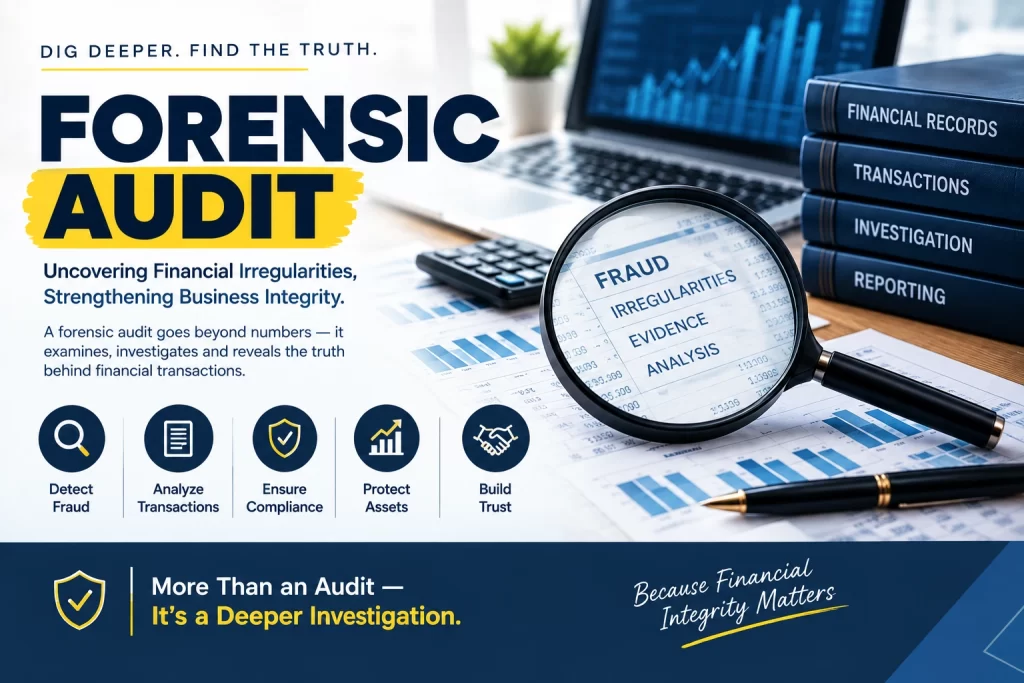
Forensic accounting is an in-depth review of financial records, financial transactions, and financial supporting documents to uncover potential financial irregularities, financial mismanagement, and/or potential fraud.
In addition to the financial auditing, a forensic accounting has a significant investigative element. The auditor is searching for any irregularities, inconsistencies, hidden transactions, and other indications that might need further examination.
A forensic audit will include a review of:
- Bank statements
- Invoices and receipts
- Accounting records
- Contracts
- Payroll information
- Tax documents
- Digital transaction records
- Email and other pertinent evidence
The aim is to find out what went wrong, identify money discrepancies, and to file the facts relevant to the incident in an orderly and well organized manner.
So, why is a Forensic Audit Essential?
Financial fraud has the potential to have more than a monetary impact. This can cause reputational damage, lose customer confidence, cause compliance issues and impact business operations.
The role of a forensic audit is to give a structured look at these risks. Financial data analysis helps professionals determine if they’ve identified any strange transactions and what they can do about it.
Forensic audits can be helpful in situations such as corporate fraud, employee fraud, asset misappropriation, insurance claims, financial disputes, and others that require detailed analysis of financial information.
What is Fraud Detection?
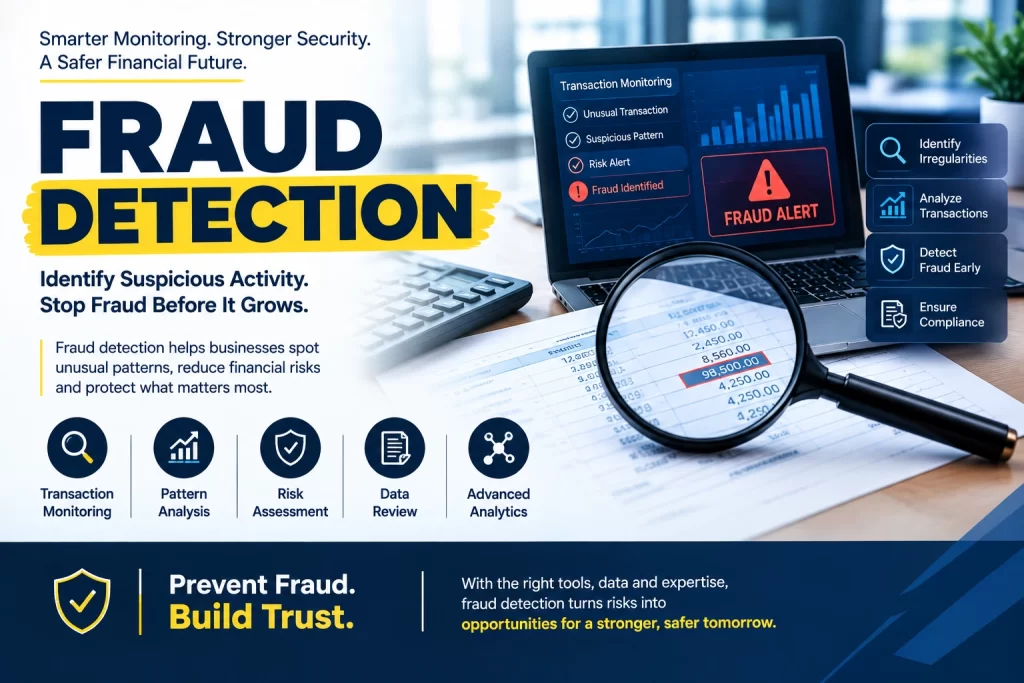
Fraud detection involves the use of methods and processes to detect potentially fraudulent activities. The aim of this is to identify suspicious activity as early as possible and do what is appropriate about it.
Whether looking at transactions, watching for financial activity, studying trends, reviewing paperwork, or applying technology to detect unusual activity, fraud detection is a process that examines transactions.
For instance, if your payments are being sent to an account you’re not familiar with, you might need to look into this further if the invoice has been duplicated, your financial records are being changed without any prior notice, or this financial pattern looks unusual.
There is no single way to do it effectively in terms of fraud detection. In general, these internal controls, employee awareness, financial monitoring, data analysis and regular reviews work best when implemented together as a package to benefit the business.
How Forensic Audit Supports Fraud Detection
The forensic audit is related to fraud detection, but these are two distinct processes.
Both fraud detection and a forensic audit can involve looking for potential warning signs with a forensic audit having a deeper dive into financial information after it has been seen as an issue or concern.
For instance, a business can have a monitoring system that detects an unusual payment. A forensic expert can then review related invoices, bank statements, approval workflows, and transaction history to gain insights into the circumstances surrounding the payment.
Organizations can go from being alert to an irregularity to gaining a better understanding of financial activity in this manner.
The most used methods of fraud detection are discussed.The most frequently used fraud detection techniques are covered.
There are a number of methods which businesses can implement to increase fraud detection.
Transaction Analysis
Financial transaction history reviews may be useful to spot unusual amounts, unusual payment history, or transactions that don’t appear to be consistent with the way the business operates.
Document Review
Invoices, contracts, receipts and other records can be checked against to find differences or missing data.
Data Analysis
Financial data can be analysed to uncover patterns that would not be immediately discernible from a manual analysis of the data, if it could be analysed at all.
Internal Controls
Improved approvals, access controls, segregation of duties and periodic reconciliations can help limit fraud opportunities.
Employee Awareness
Cultivating employees to become more sensitive to suspicious activities can lead to detecting potential problems at an early stage.
How Technology has a role in Fraud Detection.The role of Technology in Fraud Detection.
Technology is playing an important role in fraud detection today. Data analytics, automated monitoring, AI and machine learning can be used to analyze vast amounts of financial data that would be too time consuming for human review.
Such tools can be used to spot unexpected trends and funnel transactions for human review. Technology, however, is not the sole replacement for investigation, but should be used in conjunction with the use of appropriate policies and professional judgement.
With so many financial transactions happening online these days, companies must continually audit and enhance their fraud prevention and detection efforts.
How GAFA’s Supports Forensic Accounting Skills
The Global Association of Forensic Accountants (GAFA) is dedicated to the field of Professional Forensic Education, Fraud Investigation, Financial Crimes and related areas.
If you’re looking to a forensic audit, fraud investigation or financial analysis, specific training may prove to be a valuable asset in building the skills you need. The study of financial records, the investigative process, evidence analysis, fraud risks and reporting may offer a useful foundation for professional development.
Linking theory with practice can enable practitioners to gain a more rounded view of financial investigations.
Conclusion
Forensic auditing offers a thorough way of reviewing financial transactions and assessing potential fraud, and fraud detection helps organizations recognize suspicious transactions and financial risks. These can help to enhance financial controls and fraud risk management when combined.
With the growing digitalization of business transactions and growing fraud threats, accounting and investigative skills are still needed. There are opportunities for learners and professionals to build up their knowledge of forensic accounting, fraud investigation and financial crime through organisations like GAFA.
Various methods that can help minimize financial fraud can be integrated into a more structured approach, including regular monitoring, robust internal controls, employee awareness, technology, and professional investigation.
Frequently Asked Questions
1.What is a Forensic Audit?
A forensic audit involves a comprehensive analysis of financial statements, transactions and documents in order to uncover any potential for fraud, financial irregularity or misconduct.
2.What are business benefits of fraud detection?
Fraud detection assists in determining suspicious transactions and the uncharacteristic financial activity. It can assist organizations in addressing a potential fraud and enhancing internal checks.
3.A forensic audit is different from fraud detection, so what is it?
Fraud detection aims at determining if there are any potential indications of fraud, and a forensic audit is a thorough study of a company’s financial records and evidence to understand the suspected financial irregularities.
4. What techniques are used for fraud detection?
Common fraud detection techniques include transaction analysis, document reviews, financial data analysis, internal controls, employee training, and automated monitoring systems.
5. When might a business need a forensic audit?
A business may consider a forensic audit when it identifies suspicious transactions, financial discrepancies, employee misconduct, asset misappropriation, or other concerns that require detailed financial investigation.