

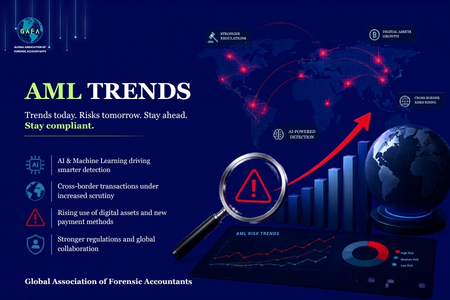
The financial ecosystem in 2026 looks very different from what it was just a few years ago. With digital payments, cross-border transactions, and fintech innovations accelerating at an unprecedented pace, financial crime has also become more sophisticated. This shift has made Anti-Money Laundering (AML) practices more critical than ever.
Understanding the latest AML trends in 2026 is no longer optional—it’s essential for financial institutions, fintech startups, and compliance professionals. At GAFA, we help professionals stay ahead of these changes with industry-relevant insights and certifications.
What is AML and Why It Still Matters in 2026
Anti-Money Laundering (AML) refers to a set of regulations, laws, and procedures designed to prevent criminals from disguising illegally obtained funds as legitimate income.
In 2026, AML is not just about compliance it’s about risk management, reputation protection, and financial integrity. Governments worldwide are tightening AML regulations, making it mandatory for organizations to adopt smarter compliance frameworks.
Enroll the AML Certification
Key AML Trends in 2026
1. AI-Powered AML Compliance is the New Standard
One of the most significant AML trends in 2026 is the integration of Artificial Intelligence (AI) and Machine Learning (ML) into compliance systems.
Traditional rule-based systems are no longer sufficient. AI-driven AML solutions can:
- Detect unusual transaction patterns in real time
- Reduce false positives significantly
- Automate risk scoring and monitoring
Financial institutions are now investing heavily in AI-based AML tools to enhance accuracy and efficiency.
2. Real-Time Transaction Monitoring is Becoming Mandatory
Regulators are pushing organizations to move from delayed monitoring to real-time transaction surveillance.
In 2026, AML systems are expected to:
- Flag suspicious activities instantly
- Enable immediate intervention
- Improve reporting timelines
This shift is particularly important for digital banking and fintech platforms where transactions occur in seconds.
3. Rise of Crypto and Digital Asset Regulations
Cryptocurrency adoption has surged, and so has its misuse for illicit activities. As a result, AML regulations around digital assets have become stricter.
Key developments include:
- Mandatory KYC for crypto exchanges
- Blockchain transaction tracking tools
- Global regulatory frameworks for digital assets
Organizations dealing with crypto must now integrate AML compliance for digital currencies into their operations.
4. Enhanced Customer Due Diligence (CDD) and eKYC
Customer onboarding has evolved significantly. In 2026, Enhanced Due Diligence (EDD) and electronic KYC (eKYC) are at the core of AML strategies.
Businesses are now:
- Using biometric verification
- Leveraging government databases
- Conducting continuous customer monitoring
This ensures that risks are identified not just during onboarding but throughout the customer lifecycle.
5. Focus on Beneficial Ownership Transparency
Shell companies and hidden ownership structures have long been used for money laundering. To combat this, regulators are enforcing stricter rules on Ultimate Beneficial Ownership (UBO) disclosure.
Organizations must now:
- Identify real owners behind entities
- Maintain updated ownership records
- Report discrepancies promptly
This trend is reshaping corporate compliance globally.
6. Cross-Border AML Collaboration is Increasing
Financial crimes are no longer confined to one country. In response, global regulators are working together more closely.
In 2026, AML compliance includes:
- Information sharing between countries
- Unified reporting standards
- Joint investigations
This collaboration helps detect and prevent international money laundering networks.
7. AML Compliance for Fintech and Startups
Fintech companies are under increasing scrutiny. Earlier, AML compliance was primarily associated with banks, but now startups must also comply with strict regulations.
Key expectations include:
- Robust AML frameworks from day one
- Automated compliance systems
- Regular audits and reporting
This shift highlights the importance of AML knowledge for professionals in emerging financial sectors.
Read More About:- AML compliance fintech India
8. Regulatory Technology (RegTech) is Driving Efficiency
RegTech solutions are transforming how organizations handle compliance. These tools help automate complex AML processes and reduce manual effort.
Popular RegTech applications include:
- Automated reporting systems
- Risk assessment tools
- Compliance dashboards
In 2026, businesses are adopting RegTech to stay compliant while reducing operational costs.
9. Increased Penalties for Non-Compliance
Regulatory bodies are imposing heavier penalties for AML violations. Non-compliance can result in:
- Massive financial fines
- Reputational damage
- Legal consequences
This trend is pushing organizations to prioritize AML compliance like never before.
10. Continuous AML Training and Certification
With evolving regulations, professionals must stay updated. Companies are now investing in AML training and certification programs to build skilled compliance teams.
At GAFA, we focus on equipping professionals with practical AML knowledge aligned with current industry demands.
Challenges in Adapting to AML Trends
While these trends bring advancements, they also present challenges:
- High implementation costs for AI systems
- Complexity in regulatory requirements
- Data privacy concerns
- Shortage of skilled AML professionals
Organizations must strike a balance between compliance and operational efficiency.
How Businesses Can Stay Ahead in 2026
To effectively adapt to the latest AML trends in 2026, businesses should:
- Invest in advanced AML technologies
- Strengthen internal compliance teams
- Conduct regular audits and risk assessments
- Stay updated with global regulatory changes
- Provide continuous training to employees
A proactive approach is key to staying compliant and competitive.
Why AML Knowledge is a Career Advantage
With AML becoming a top priority globally, professionals with AML expertise are in high demand. Career opportunities include:
- AML Analyst
- Compliance Officer
- Risk Management Specialist
- Financial Crime Investigator
Learning AML not only enhances your career prospects but also positions you as a valuable asset in the financial industry.
Conclusion: The Future of AML is Intelligent and Proactive
The latest AML trends in 2026 clearly indicate a shift towards technology-driven, real-time, and globally coordinated compliance frameworks. Organizations that fail to adapt risk falling behind both legally and competitively.
At GAFA, we believe that staying informed and continuously upgrading your skills is the key to success in this evolving landscape.
FAQs
Q1. What are the latest AML trends in 2026?
Answer: The latest AML trends in 2026 focus on technology-driven compliance, including AI-powered monitoring, real-time transaction tracking, and stricter cryptocurrency regulations. Organizations are also adopting RegTech solutions to automate compliance processes. Enhanced due diligence, beneficial ownership transparency, and global regulatory collaboration are shaping AML frameworks. These trends aim to improve efficiency, reduce financial crime risks, and ensure faster detection of suspicious activities across financial systems worldwide.
Q2. Why is AI important in AML compliance?
Answer: AI plays a crucial role in AML compliance by enabling faster and more accurate detection of suspicious transactions. Unlike traditional systems, AI can analyze large volumes of data in real time and identify hidden patterns. It reduces false positives, improves efficiency, and supports proactive risk management. In 2026, AI-driven AML systems are essential for organizations to stay compliant and effectively combat evolving financial crimes.
Q3. How is cryptocurrency impacting AML regulations?
Answer: Cryptocurrency has significantly influenced AML regulations by introducing new risks related to anonymity and cross-border transactions. In 2026, regulators require crypto exchanges to follow strict KYC and AML guidelines. Blockchain analytics tools are used to track transactions and detect suspicious activities. This ensures transparency and reduces misuse of digital assets for illegal purposes, making AML compliance more critical in the crypto ecosystem.
Q4. What is the role of RegTech in AML?
Answer: RegTech helps organizations manage AML compliance more efficiently by automating complex processes such as transaction monitoring, reporting, and risk assessment. In 2026, RegTech solutions are widely used to reduce manual effort, improve accuracy, and ensure regulatory adherence. These tools enable real-time insights and streamline compliance workflows, making them essential for businesses dealing with large volumes of financial data.
Q5. How can professionals build a career in AML?
Answer: Professionals can build a career in AML by gaining relevant knowledge, certifications, and practical experience. Roles such as AML analyst, compliance officer, and financial crime investigator are in high demand. In 2026, employers prefer candidates with expertise in AI-driven AML tools and regulatory frameworks. Enrolling in specialized training programs, like those offered by GAFA, can help individuals develop industry-ready skills and advance their careers.