
Blockchain forensics has become one of the fastest growing areas in cybersecurity and digital finance. As cryptocurrency adoption continues increasing globally, organizations are actively hiring professionals who can investigate blockchain transactions, trace stolen crypto assets, and identify financial crimes involving digital currencies.
The rapid growth of crypto scams, ransomware attacks, phishing operations, money laundering, and fraud schemes has created strong demand for blockchain investigation experts. Crypto exchanges, cybersecurity companies, financial institutions, and government agencies now rely heavily on blockchain forensic analysts and crypto intelligence specialists to strengthen security and compliance operations.
Because of this growing demand, blockchain forensic certifications have become highly valuable for professionals interested in cryptocurrency investigations and cybersecurity careers. These certifications help individuals develop technical skills, understand blockchain investigation techniques, and improve career opportunities in the crypto security industry.
Today, several organizations offer blockchain investigation and cryptocurrency compliance certifications focused on blockchain analysis, crypto tracing, digital forensics, and anti money laundering compliance. These programs are designed for cybersecurity professionals, investigators, compliance analysts, law enforcement officers, and beginners interested in blockchain security careers.
Why Blockchain Forensics Certifications are Important
The cryptocurrency industry evolves rapidly, and employers increasingly prefer candidates with specialized blockchain investigation skills. Certifications help professionals demonstrate their expertise in blockchain technology, crypto investigations, and financial crime analysis.
Blockchain forensics involves more than simply understanding cryptocurrency transactions. Investigators must analyze blockchain data, trace wallet activities, identify suspicious transaction patterns, and understand how criminals use decentralized platforms to hide financial activities.
Certifications provide structured learning paths that help candidates understand blockchain ecosystems, crypto fraud detection, compliance monitoring, and blockchain intelligence gathering.
Many organizations also use certifications as proof of technical competency during hiring processes. Candidates with blockchain forensic certifications often have better opportunities in cybersecurity firms, crypto exchanges, compliance organizations, and financial investigation teams.
As governments introduce stricter cryptocurrency regulations, the demand for certified blockchain investigation professionals is expected to increase even further.
Skills Covered in Blockchain Forensics Certifications
Most blockchain forensic certification programs focus on practical investigation skills used in real world cryptocurrency investigations.
One of the most important topics covered is blockchain analysis. Candidates learn how blockchain transactions work, how cryptocurrency wallets operate, and how investigators trace digital assets across decentralized networks.
Certification programs also teach cryptocurrency transaction monitoring and wallet analysis techniques. Professionals learn how to identify suspicious wallet activities and track crypto movements using blockchain intelligence platforms.
Anti money laundering compliance is another major area covered in blockchain certifications. Candidates understand Know Your Customer regulations, suspicious transaction reporting, and financial crime prevention practices used in cryptocurrency ecosystems.
Cybersecurity and digital investigation concepts are also included in many programs. Professionals learn how ransomware attacks, phishing scams, crypto fraud schemes, and darknet transactions are investigated.
Some advanced certifications also include artificial intelligence based fraud detection, blockchain intelligence analysis, decentralized finance investigations, and cross chain transaction tracing.
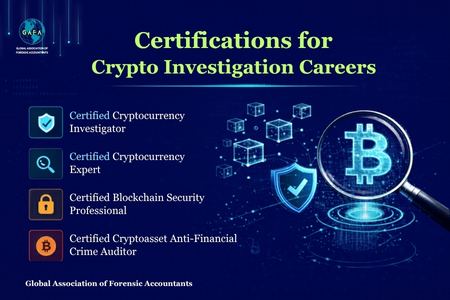
Certified Crypto Forensics Investigator (CCFI)
One of the most recognized certifications in the blockchain investigation field is the Certified Crypto Forensics Investigator certification. This program focuses on cryptocurrency tracing, blockchain analysis, and digital asset investigations.
The certification helps professionals understand how blockchain forensic investigations are conducted using transaction analysis and blockchain intelligence tools. Candidates learn how to identify suspicious wallet activities, monitor financial crimes, and analyze blockchain transaction patterns.
The program is designed for cybersecurity professionals, investigators, compliance analysts, and individuals interested in cryptocurrency investigations. It also introduces students to practical forensic investigation workflows used in real world blockchain investigations.
Professionals with CCFI certifications are increasingly valuable in the cybersecurity and crypto compliance industries because organizations need skilled investigators capable of tracing digital assets and identifying fraud networks.
EC Council Blockchain Certifications
EC-Council Blockchain Certifications offer multiple blockchain focused programs designed for cybersecurity professionals, developers, and financial technology specialists.
The organization provides certifications such as Blockchain Developer Certification, Blockchain Fintech Certification, and Blockchain Business Leader Certification. These programs focus on blockchain technology, cybersecurity, compliance, decentralized applications, and financial systems.
Although these certifications are broader than blockchain forensics alone, they provide strong foundational knowledge that is valuable for cryptocurrency investigations and blockchain security careers.
Candidates also gain exposure to blockchain security concepts, decentralized finance systems, smart contracts, and AI integrated blockchain technologies.
EC Council certifications are widely recognized in the cybersecurity industry and can strengthen career opportunities for individuals entering blockchain security and digital investigation roles.
Cryptocurrency Investigation Courses
Several specialized cryptocurrency investigation training programs are now available for professionals who want to focus specifically on crypto tracing and fraud investigations.
Training platforms such as Bitquery provide blockchain investigation courses that teach transaction tracing, blockchain intelligence gathering, wallet analysis, and crypto compliance monitoring.
These programs often include practical exercises where students investigate real cryptocurrency transactions and analyze blockchain activities using forensic tools.
Some training programs also focus on open source intelligence techniques used alongside blockchain investigations. Investigators often combine blockchain analysis with social media intelligence, domain analysis, and cyber threat intelligence during investigations.
Practical investigation training has become highly important because crypto investigations require real world transaction analysis skills rather than only theoretical blockchain knowledge.
Digital Forensics Certifications for Blockchain Careers
Traditional digital forensics certifications can also support blockchain investigation careers.
Certifications such as Certified Computer Examiner help professionals build strong digital forensic investigation skills that are valuable during cybercrime investigations involving cryptocurrencies.
Digital forensic professionals often investigate ransomware attacks, phishing campaigns, and cyber fraud cases that involve cryptocurrency payments. Understanding evidence collection, digital analysis, and forensic reporting improves investigation capabilities in blockchain related cases.
Combining digital forensics expertise with blockchain analysis skills creates strong career advantages in cybersecurity and cybercrime investigation roles.
Professionals with both traditional forensic knowledge and blockchain intelligence capabilities are increasingly valuable in law enforcement agencies and cybersecurity organizations.
Careers After Blockchain Forensics Certifications
Blockchain forensic certifications can open career opportunities across multiple industries.
Crypto exchanges actively hire blockchain analysts and compliance specialists to monitor suspicious transactions and strengthen anti money laundering compliance operations.
Cybersecurity firms recruit blockchain investigators for ransomware investigations, fraud detection, threat intelligence, and digital asset recovery operations.
Financial institutions use blockchain intelligence teams to monitor cryptocurrency related financial risks and regulatory compliance.
Government agencies and law enforcement departments also require professionals with blockchain investigation expertise to support cybercrime investigations.
Career roles after certification may include blockchain forensic analyst, crypto investigator, compliance analyst, AML specialist, cyber intelligence analyst, digital forensic investigator, and blockchain security consultant.
The increasing demand for cryptocurrency investigation professionals is creating strong long term career opportunities worldwide.
Salary Opportunities in Blockchain Investigation Careers
Blockchain forensic professionals often receive competitive salaries because of the growing demand for crypto investigation expertise.
Entry level blockchain analysts and compliance specialists can earn attractive starting salaries depending on their technical skills and certifications.
Experienced blockchain investigators and crypto intelligence analysts typically earn higher compensation packages because organizations highly value practical blockchain tracing capabilities.
Senior professionals working in ransomware investigations, cyber intelligence, and financial crime analysis often receive excellent career growth opportunities and salary benefits.
The shortage of skilled blockchain forensic professionals is expected to continue increasing salary demand in the coming years.
How to Choose the Right Certification
Choosing the right blockchain forensic certification depends on career goals, technical background, and professional interests.
Beginners entering the field should start with certifications that cover blockchain fundamentals, cryptocurrency transactions, and blockchain analysis concepts.
Cybersecurity professionals may prefer certifications focused on crypto investigations, digital forensics, and cybercrime analysis.
Compliance analysts and financial investigators often benefit from certifications covering anti money laundering compliance and transaction monitoring.
Candidates should also consider practical training opportunities, industry recognition, blockchain investigation tools covered, and career support provided by certification programs.
Hands on blockchain investigation practice is especially important because real world crypto investigations require practical analytical skills.
Future of Blockchain Forensics Certifications
The future of blockchain forensic certifications looks highly promising as cryptocurrency ecosystems continue expanding globally.
Governments are increasing cryptocurrency regulations, financial institutions are adopting blockchain intelligence platforms, and cybersecurity organizations are investing heavily in crypto investigation capabilities.
Artificial intelligence and machine learning are also transforming blockchain investigations, creating demand for professionals with advanced fraud detection and blockchain analytics skills.
Web3 platforms, decentralized finance systems, NFTs, and digital asset ecosystems will continue generating new investigation challenges and career opportunities.
As cybercrime evolves, blockchain forensic certifications will become increasingly important for professionals looking to build long term careers in cybersecurity and digital finance.
Conclusion
Blockchain forensic certifications have become highly valuable for professionals interested in cryptocurrency investigations, cybersecurity, and financial crime analysis. These certifications help candidates build blockchain investigation skills, improve technical expertise, and strengthen career opportunities in the rapidly growing crypto security industry.
Programs focused on blockchain analysis, cryptocurrency tracing, digital forensics, and anti money laundering compliance are helping organizations build stronger investigation and fraud detection capabilities.
As cryptocurrency adoption continues increasing worldwide, certified blockchain forensic professionals will remain in high demand across cybersecurity firms, financial institutions, crypto exchanges, and law enforcement agencies.
FAQs
Q1. What is a blockchain forensics certification?
Answer: A blockchain forensics certification is a professional training program that teaches cryptocurrency investigation, blockchain analysis, and digital asset tracing skills.
Q2. Which certification is best for crypto investigations?
Answer: Popular certifications include Certified Crypto Forensics Investigator and blockchain security certifications from recognized cybersecurity organizations.
Q3. Are blockchain forensic certifications worth it?
Answer: Yes. Certifications improve technical knowledge, industry credibility, and career opportunities in blockchain security and crypto investigations.
Q4. Can beginners learn blockchain forensics?
Answer: Yes. Many certification programs are designed for beginners and cover blockchain fundamentals before advanced investigation concepts.
Q5. Which industries hire blockchain forensic professionals?
Answer: Crypto exchanges, cybersecurity firms, banks, compliance organizations, fintech companies, and law enforcement agencies hire blockchain investigation professionals.