

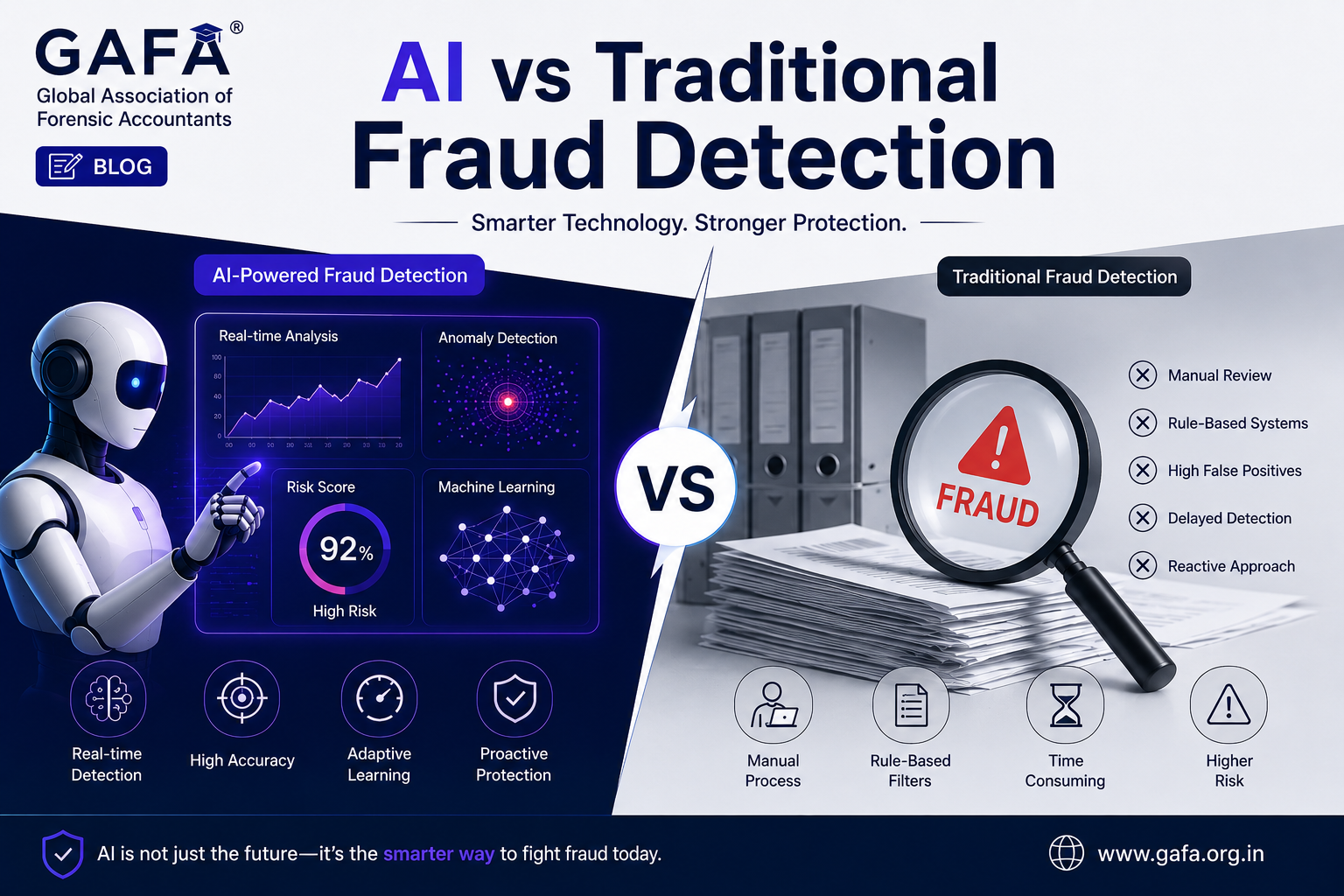
Traditional fraud detection systems fail as they run on a predetermined pattern.
They are programmed to block historical patterns. When fraudsters alter their behavior slightly, static filters let them through undetected, driving up false-positive overhead and leaking massive quantities of capital.
For several decades, global enterprises shielded their digital infrastructure using classic rule based fraud detection formulas. These structures operated with basic binary frameworks, such as triggering an administrative review if a financial transaction exceeded $5,000 or originated from an unexpected geographical territory. While this defense line sufficed for predictable, slowmoving historical fraud networks, it has proven fundamentally inadequate against the contemporary onslaught of polymorphic digital attacks.
The core structural flaw of traditional systems is their inability to learn from patterns. Every time it needs to be manually trained to research the incident, write a new rule and test for conflicts and then push it live to the operational environment. This manual update cycle creates an inevitable vulnerability window lasting anywhere from several days to months. During this latency period, organized bad actors execute multi-million dollar extraction campaigns before the system even registers that an attack is underway.
Furthermore, legacy rule architectures scale exceptionally poorly. Over time, an organization amasses thousands of overlapping, legacy rules that frequently clash with one another. This complex web results in extreme system rigidity, causing high volumes of false positives where legitimate consumers are misidentified as malicious actors. The resulting customer friction, such as unprovoked account lockouts, repetitive multi-factor authorization bottlenecks, and false declines erodes brand loyalty and drives consumers to more friction-free digital competitors.
Enroll and get certification in Financial Fraud Investigation by GAFA and equip yourself with professional skills to detect fraud.
How Does AI-Based Fraud Detection Radically Change Financial Defense?
Modern AI-based fraud detection uses deep machine learning models to analyze thousands of behavioral variables simultaneously. Instead of verifying fixed rules, it maps abstract transactional patterns and behavioral anomalies in real-time, shutting down unknown attack configurations instantly.
The definitive move toward automated AI fraud detection swaps historical reaction for real-time intuition. Rather than evaluating transactions line-by-line against a checklist of past rules, an artificial intelligence architecture monitors thousands of micro-behaviors across an entire network surface concurrently. This includes assessing typing speed, mouse movement jitter, device fingerprint indicators, localized application navigation speed, and ambient micrometadata that humans could never manually index.
These specialized neural networks detect unauthorised anomalies in the algorithms and find patterns that are unique to the user behavior. As these AI models are trained to detect behavioral deviations, they naturally recognize completely unprecedented attack vectors the very first time they are deployed. This layer shifts an enterprise’s defense perimeter from defensive cleanup to predictive interception.
Crucially, AI based fraud detection lowers overhead costs while streamlining operational efficiency. Instead of forcing risk analysts to wade through mountain-sized heaps of ambiguous false alarms, the machine learning engine assigns dynamic risk scores to all interactions. High-confidence legitimate activity passes instantly without frustrating verification prompts, while high-risk transactions face immediate automated rejection. Only a small, highly contextualized subset of intermediate risk triggers is channeled to humans, turning data review teams into highly targeted strike teams.
AI Contact Center Tools vs Traditional Fraud Detection Systems
Comparing AI contact center tools vs traditional fraud detection systems reveals a massive capability gap. Legacy systems process structured digital numbers, completely missing omnichannel audio patterns. Advanced AI contact center engines analyze voice acoustics, behavioral speech patterns, and biometric markers to block advanced social engineering attacks instantly.
The contemporary fraud perimeter extends far beyond standard web-based checkout portals. As digital firewalls tighten, threat actors increasingly focus their energy on telephone operations, targeting support desks via sophisticated social engineering. When analyzing the efficacy of ai contact center tools vs traditional fraud detection systems, legacy frameworks display a critical blind spot: they are entirely blind to human speech characteristics, conversational nuances, and telephony signal irregularities.
Enroll and get your certification in AI fraud detection from GAFA today.
Traditional security systems heavily rely on Knowledge-Based Authentication (KBA), asking callers for their mother’s maiden name, childhood pets, or partial security numbers. In an era plagued by massive, routine dark-web data dumps, bad actors routinely possess these exact answers. When an agent relies exclusively on legacy tools, they inadvertently open the door to accounts because the caller holds the correct static information.
Conversely, integrating comprehensive AI based fraud detection inside the communications center transforms how caller identity is verified. Modern voice intelligence systems actively monitor acoustic features to determine whether a voice is organically produced or an advanced deepfake synthesis. Simultaneously, the tool tracks background network noise metadata to identify whether a call claiming to be a consumer’s quiet home is actually routing through an offshore, automated fraud warehouse. This allows systems to flag high-risk social engineering scenarios in real-time before agents manipulate account parameters.
| Feature | Traditional Rule-Based Systems | AI Based Systems |
| Analysis Velocity | Batch or post-facto execution. Lagging response profiles | Sub-100 millisecond inline streaming inference. |
| Data Scope Capability | Limited to basic structured alphanumeric parameters. | Processes raw unstructured audio, biometric telemetry, and behavior. |
| Operational Scalability | Degrades as rules conflict, increasing systemic rigidity. | Continuously improves via feedback loops and self-training data. |
| False Positive Experience | High friction; routinely blocks genuine buyers | Ultra-low; custom behavioral profiles streamline real users. |
| Voice Interface Protection | Non-existent; restricted to simple data entry fields. | Deep acoustic monitoring, synthetic audio detection, and telephony trace. |
What Is the Actual AI Fraud Detection Loss Reduction Percentage?
For executive leadership teams, shifting security technologies requires concrete financial evidence. Transitioning away from legacy investments requires a clear return on investment. Performance data reveals that AI fraud detection loss ranges from 35% to over 60% in only one year of deployment. This massive reduction in stolen capital stems directly from three distinct operational advantages:
Immediate Zero-Day Exploit Mitigation
As AI tracks unique fraud patterns rather than depending on structural updates, they regularly catch massive automated attacks on day one, avoiding cascading chargeback fees.
Drastic Reduction in Operational Review Overhead
Reducing score accuracy reduceS manual validation queue by 70% which allows
security personnel to focus on high-impact investigations.
Recapturing Wrongfully Declined Sales
AI fraud detection avoids false alarms which ensures smooth transitions of financial operations and saves cost to the company.
When computing total cost considerations, companies must look beyond basic fraud losses to evaluate the total impact on operational overhead. Traditional tools require continuous maintenance and are expensive whereas AI tools automatically adapt to changing trends. This reduces ongoing operational maintenance cost.
Implementing Next-Gen Protection: How to Seamlessly Migrate Without Disruption
Transitioning from old-school structures to cloud-native machine engines does not require an immediate, risky complete overhaul of your existing systems. The most successful security modernizations utilize a hybrid approach. This allows organizations to layer advanced predictive algorithms directly over their legacy databases without disrupting active customer transactions.
The initial phase involves running the cognitive engine in passive “shadow mode.” During this period, the predictive platform ingests live telemetry, processes transaction profiles, and flags hidden threats without blocking transactions. This enables risk teams to verify the engine’s precision, fine-tune specific risk score boundaries, and watch the platform outperform legacy setups in real time.
Once the shadow phase proves successful, the platform transitions to active defense mode. The AI engine takes over primary transaction scoring, while the traditional system is repurposed as a basic fallback compliance layer. This phased rollout eliminates operational downtime, builds confidence across security teams, and guarantees uninterrupted service for your customer base.
Learn AI based fraud detection tools by GAFA and understand fraud risk assessment used in modern fraud investigations.
Frequently Asked Questions (FAQ)
Q1. What is the difference between traditional-based and AI-based fraud detection?
Answer: Traditional-based systems rely on static, manually programmed parameters. AI-based fraud detection uses machine learning to evaluate thousands of live, fluid data points simultaneously, identifying unique attack patterns based on real-time behavior rather than static historical lists.
Q2. What is a realistic AI fraud detection loss reduction percentage for enterprises?
Answer: Most enterprise organizations achieve an ai fraud detection loss reduction percentage between 35% and 60% within twelve months of turning off static rules. This is driven by catching novel exploits instantly and drastically lowering false alarms on genuine transactions.
Q3. How do AI contact center tools protect against voice fraud?
Answer: Unlike legacy systems that rely on easily stolen security questions, modern voice intelligence platforms analyze acoustic telemetry, voice biometrics, and background audio signatures. This enables them to distinguish real human callers from synthetic deepfakes and automated call center spoofing scripts.
Q4. Does adopting AI fraud detection increase customer friction?
Answer: AI fraud detection significantly reduces customer friction. As machine learning models are highly accurate at recognizing genuine user behaviors, legitimate buyers pass through without security hurdles. Verification loops are reserved exclusively for high-risk anomalies.
Q5. Can AI-based systems completely replace human fraud analysts?
Answer: AI is designed to automate high-volume data triage, not completely replace human oversight. By handling 99% of routine reviews, the system frees up human analysts to focus on complex, edgecase threat investigations and strategic policy design.