

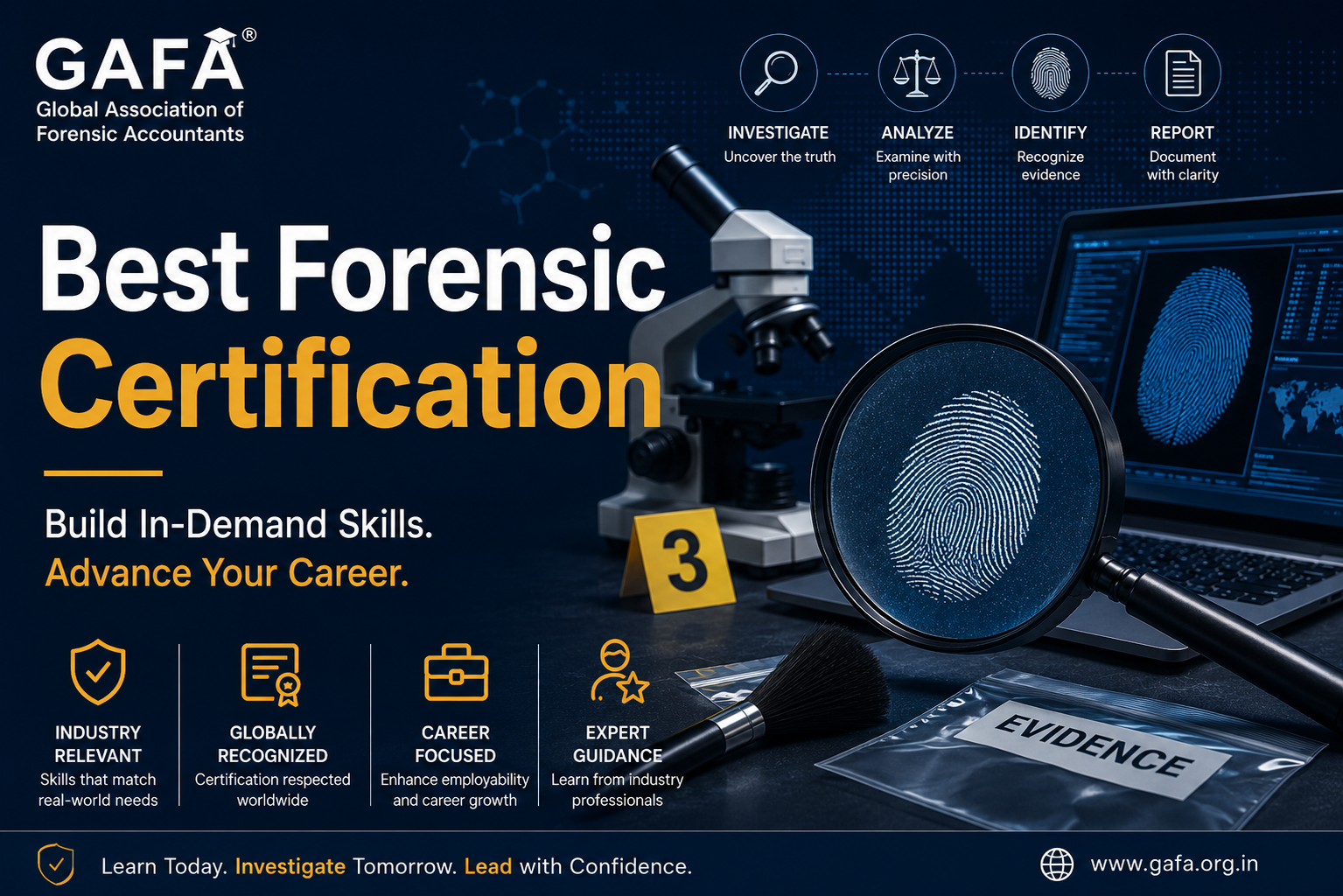
If you have been thinking about building a career in forensic science you might have noticed one thing: there are plenty of certification processes available. Some promise hands-on training while others focus on theory and just claim to be the best. With so many choices it’s natural for you to wonder which one is actually worth your time and money. The truth is not every forensic certification offers the same value. A good course should way more than just give your certificate. It should help you understand how forensic investigations work and teach you practical skills.
Start by knowing why you want the certification
Before you start comparing courses you need to take a moment and think about your career goals. Are you interested in investigating cyber crimes? Do you want to work in digital forensics? Your answer matters because forensic science covers many different areas. Some certifications focus on digital investigations while others cover crime scene analysis and mobile forensics. When your certification matches your career goals you are more likely to gain the skills that employers are looking for.
Check what you will actually learn
A course title can sound very impressive but the curriculum that tells you whether the program is worth considering or not. You need to look for a certification that covers topics like digital evidence collection, evidence preservation, chain of custody and report writing. A well structured curriculum should give you both theoretical knowledge and practical understanding. If the syllabus looks really outdated or too basic it’s completely worth exploring other options.
Practical training makes a big difference
Forensic science is not just something that you learn only by reading books. Real investigation requires you to examine evidence, analyze data and document findings. That’s why practical training should be one of your biggest priorities. A good forensic certification should include live demonstrations and case studies. The more evidence you gained during the training the more confident you will feel when you are working on actual cases.
Learn from professionals who have real experience
The quality of your instructors can shape your entire learning experience. You need to try and find out who will be teaching the course. Have they worked on investigations before? Have they trained professionals before? Experienced trainers often share practical insights that you simply won’t find in textbooks. They can also explain to you how investigations work in real life situations.
Make sure the course keeps up with technology
Technology changes quickly and forensic investigations change with it. New cyber threats or devices and investigation methods appear all the time. A good certification should regularly update its content to reflect current industry practices.
Look for hands on experience with forensic tools
Using professional forensic software is a very important part of learning. Depending on the course you might get exposure to tools used for computer forensics memory analysis and network investigations. Even if you do not become an expert overnight, learning how these tools give you a strong advantage when applying for roles.
Find out whether the certification is recognized
One question that you might forget to ask is whether your employers actually recognize certification. Before enrolling, do a little research. Check whether the institute has a good reputation or industry professionals recommend the program. A respected certification can make your resume stronger and help you stand out during recruitment.
Read student reviews before you decide
Student feedback often tells you what brochures don’t. Look beyond the reviews that mention teaching quality and practical learning besides course structure and placement guidance. If many learners mention the same strengths that’s usually a positive sign.
Don’t choose based only on price
It’s tempting for you to compare courses based on the cost alone. But the cheapest option is not always the best and the most expensive course automatically doesn’t give you the right choice. Instead ask yourself will I gain practical skills? Does this course include real projects? Is the curriculum updated? Think about the value that you are going to get rather than just the course fees.
So choosing the best forensic certification is not just about finding the course with the biggest promises. It’s all about selecting a program that genuinely prepares you for the work that you will be doing in the real world. Take your time, compare options and carefully focus on practical learning.
Build your forensic career with GAFA
Looking for a certification that goes beyond classroom learning? GAFA Offers industry-focused forensic training designed to help you gain practical knowledge and hands-on experience.
Faqs
Q1: Who can apply for a forensic certification course?
Answer: Most forensic certification programs are open to students and graduates besides IT professionals.
Q2: Is practical training necessary in forensic certification?
Answer: Yes, practical training is one of the most important parts of forensic education.
Q3: Can I pursue a forensic application online?
Answer: Yes many students offer online or hybrid forensic certification courses. But it’s a good idea to choose a program that also includes hands-on lab and practical assignments.
Q4: How long does it take to complete a forensic certification?
Answer: The duration depends on the institute and the level of the course.
Q5: What should I look for before choosing a forensic certification?
Answer: Look for a course that offers an ability curriculum and practical training.