

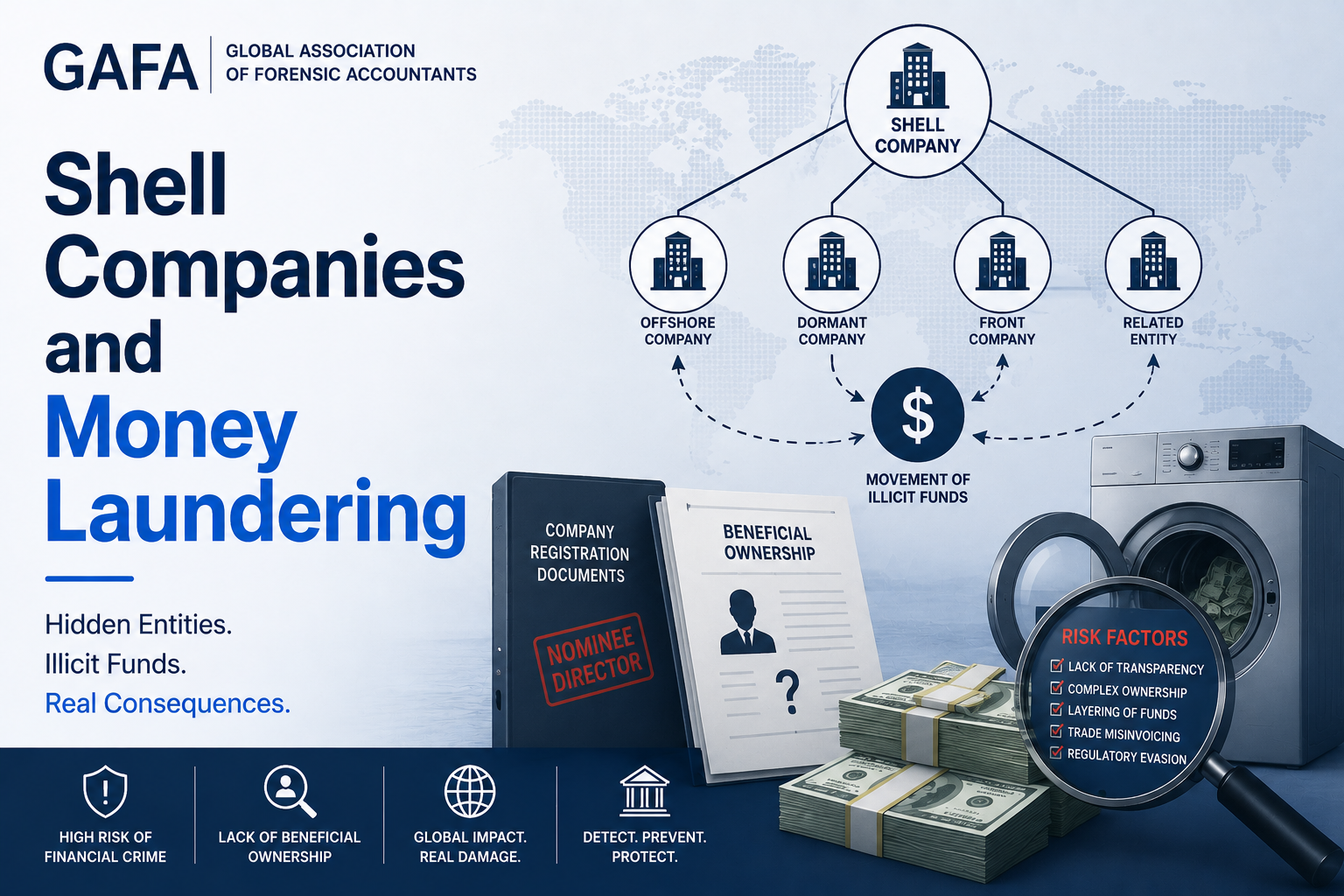
A shell company is simply a registered business entity that holds no physical operational assets, runs no active business operations, and employs no regular staff. On paper, it possesses an official incorporation certificate, a registration number, and usually a business bank account. In reality, it is an empty shell.
Setting up a shell company is not inherently illegal. Corporations, private equity managers, and wealthy individuals use them every single day for legitimate commercial reasons, including:
Mergers and Acquisitions: Holding funds or assets temporarily while structuring complex corporate deals across borders.
Asset Protection and Anonymity: Keeping patents, trademarks, or trade secrets separated from operational corporate liabilities.
Maintaining Privacy: Allowing high-profile individuals or real estate developers to acquire property without sparking speculative price jumps or media frenzies.
Risk Mitigation: Limiting liability in risky international ventures like maritime shipping, energy exploration, or aviation leasing.
The problem starts when scamsters realize these exact same legal privacy features can be turned into an opaque barrier against law enforcement. When fraudsters set up offshore shell companies in jurisdictions with zero tax reporting and strict secrecy laws, legitimate corporate privacy transforms straight into illegal financial concealment.
Ready to sharpen your compliance edge and lead financial investigations? Learn more about GAFA AML Certifications today.
How Shell Companies Launder Money
1. Placement: Inserting Dirty Cash into the Financial System
The placement phase is all about getting dirty cash into the formal financial system without raising immediate alarms. Criminal groups frequently set up cash-intensive front businesses like car washes, parking garages, or consulting agencies, registered under a shell entity. Cash is deposited directly into bank accounts owned by these entities, commingled with legitimate business revenues to evade initial suspicion.
2. Layering: Creating Complex Webs of Obfuscation
This is where shell companies truly shine. During layering, money launderers move funds through dozens of offshore shell companies across multiple jurisdictions in rapid succession. An entity in Delaware transfers $500,000 to an entity in the
British Virgin Islands, which immediately loans $480,000 to a third entity in Cyprus. Fake invoices for consulting services,advisory retainers, or software licensing are generated to give these wire transfers the appearance of legitimate commercial
transactions. The complex web makes tracing the original paper trail nearly impossible for local investigators.
3.Integration: Reintroducing Clean Capital
Once the money has traversed several legal barriers and jurisdictions, it enters the integration phase. The shell company uses its “clean” funds to acquire luxury assets such as superyachts, commercial real estate in major capitals, or high-value art pieces. Alternatively, the shell company pays out salaries or dividends to the criminal masterminds, completing the transformation of dirty money into legitimate wealth.
Elevate your investigative skills with industry-leading GAFA AML Certifications designed for modern compliance professionals.
Unmasking the Real Owners: The Beneficial Ownership Problem
At the absolute center of corporate financial crime is the deliberate hiding of the beneficial ownership shell company structure. In anti-money laundering regulations, the Ultimate Beneficial Owner (UBO) refers to the real human being who ultimately owns or controls a legal entity, regardless of whose name appears on the public registry.
Criminals use several well-worn tricks to ensure the UBO’s real name never appears on official documents:
Nominee Directors and Shareholders: Shell owners rent the identities of local lawyers, corporate service providers, or paid third parties. These nominees sign corporate papers and act as legal representatives on paper, even though they have zero real control over the business or its funds.
Corporate Directors: Setting up a shell company where the director is another shell company, creating an endless circular Russian-doll chain of ownership.
Trust and Foundation Structures: Inserting discretionary offshore trusts into the ownership stack, effectively separating legal title from beneficial enjoyment.
Without strict Know Your Customer (KYC) standards and deep beneficial ownership checks, financial institutions risk opening accounts for anonymous figures with dark motives.
Shell Company Red Flags Every Investigator Must Know
Spotting illicit shell entities requires looking beyond basic incorporation documents. You have to analyze transactional behavior, corporate governance patterns, and geographic connections.
| Evaluation Area | Legitimate Corporate Profile | Shell Company Red Flags |
| Physical Operations | Verified office space, physical employees, utility bills, local phone numbers. | Registered to mass incorporation address, PO Box, or law firm shared by thousands of companies. |
| Commercial Rationale | Clear products, visible services, trade history, industry presence. | Vague purpose statements like general trading, international consulting, or financial services. |
| Transaction Velocity | Regular payroll, operational vendors, predictable cash flow matching business size. | Pass-through account activity: large round-dollar wires enter and leave within 24–48 hours. |
| Corporate Governance | Identifiable executive leadership, industry experienced management team. | Use of professional nominee directors or recent ownership changes right before large transfers. |
| Geographic Footprint | Transactions correlate with stated market presence and supply chains. | Frequent cross-border transfers involving high-risk tax havens and offshore secrecy jurisdictions. |
When multiple red flags align such as a newly formed shell company with no web presence receiving millions in “management fees” from an offshore secrecy tax haven investigators must immediately trigger enhanced due diligence (EDD) protocols and file Suspicious Activity Reports (SARs).
Detecting Shell Companies in Modern Financial Systems
As money launderers adapt, financial institutions and regulatory authorities are replacing outdated manual compliance reviews with modern, intelligence-driven methodologies for detecting shell companies.
Graph Analytics and Network Analysis
Modern AML teams use graph database technologies to map hidden connections between entities. If twenty distinct corporations share the same phone number, corporate officer, or IP address during online banking sessions, network
visualization tools instantly flag the group as a potential shell network.
Centralized Beneficial Ownership Registers
Global regulatory frameworks—such as the United States’ Corporate Transparency Act (CTA) and the EU’s Anti-Money Laundering Directives—are mandating centralized registers of ultimate beneficial owners. These regulatory measures aim to
eliminate anonymous corporate structures and make transparency standard across jurisdictions.
Behavioral Transaction Monitoring
Advanced transaction monitoring algorithms flag accounts exhibiting “pass-through” behavior—where funds are wired into an account and immediately transferred out in full to secondary offshore accounts without retaining operational working capital.
Build expertise in detecting corporate financial crime by enrolling in GAFA AML Certifications.
Frequently Asked Questions (FAQ)
Q1. Are all shell companies illegal to set up?
Answer: No. Setting up a shell company is entirely legal. They are standard tools used in corporate finance for holding intellectual property, structuring corporate mergers, or managing venture capital. They only become illegal when people use them to obscure ownership, evade taxes, or launder money.
Q2. What is the difference between a shell company and a shelf company?
Answer: A shell company is an entity created with minimal assets and no operations. A shelf company (or aged company) is an entity that was incorporated in the past and “left on a shelf” to age. Buyers purchase shelf companies to create the illusion of having an established, long-standing business history when applying for credit or contracts.
Q3. How do beneficial ownership registers help prevent financial crime?
Answer: Beneficial ownership registers require entities to report the actual human beings who own or control them. By making this information available to law enforcement and compliance officers, these registries strip away the anonymity that lets criminals hide behind nominee directors and complex corporate webs.
Q4. What are the most common red flags associated with shell companies?
Answer: Key red flags include mass corporate registration addresses, high-volume wire transfers with immediate pass-through funds, vague corporate descriptions (e.g., “consulting”), missing physical infrastructure, and the involvement of professional nominee directors from high-risk offshore secrecy jurisdictions.
Q5. How does GAFA help professionals detect shell company laundering?
Answer: GAFA provides practical training programs and certifications focused on beneficial ownership tracking, trade-based money laundering, network analytics, and financial investigation techniques, giving compliance professionals the real-world skills needed to detect and prevent complex financial crimes