
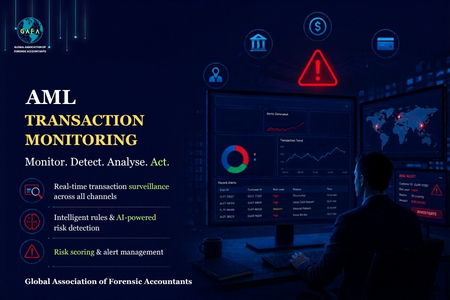
Financial crime is evolving faster than ever, and businesses today face growing pressure to detect suspicious activities before they escalate. This is where AML Transaction Monitoring becomes a critical pillar of compliance.
AML Transaction Monitoring Explained simply refers to the process of continuously reviewing financial transactions to identify unusual patterns, suspicious behavior, or potential money laundering activities. For organizations dealing with financial data, it’s not just a regulatory requirement it’s a necessity for protecting reputation and operations.
At GAFA, we help professionals and businesses understand how AML systems work and how to implement them effectively in real-world scenarios.
What is AML Transaction Monitoring?
AML Transaction Monitoring Explained in simple terms is the automated and manual process of tracking, analyzing, and flagging financial transactions to detect potential financial crimes.
This system works by:
- Monitoring customer transactions in real-time or batch processing
- Identifying unusual patterns based on predefined rules
- Generating alerts for suspicious activities
- Assisting compliance teams in investigation
It plays a vital role in Anti-Money Laundering (AML) compliance frameworks, ensuring organizations meet regulatory expectations.
Why AML Transaction Monitoring is Important
Ignoring AML transaction monitoring is not just risky it can be extremely costly. Regulatory penalties, reputational damage, and legal consequences can severely impact a business.
Enroll The AML Certification
Here’s why AML Transaction Monitoring Explained is crucial:
1. Detects Suspicious Activities Early
It helps identify unusual transactions such as large cash deposits, rapid fund transfers, or structuring.
2. Ensures Regulatory Compliance
Authorities worldwide mandate AML systems to prevent financial crimes.
3. Protects Business Reputation
Being linked to money laundering can damage trust permanently.
4. Reduces Financial Risks
Early detection helps prevent fraud and financial losses.
How AML Transaction Monitoring Works
Understanding AML Transaction Monitoring Explained requires knowing how the system operates step-by-step:
1. Data Collection
Transaction data is collected from multiple sources like banks, payment systems, and customer accounts.
2. Rule-Based Screening
Predefined rules (e.g., transactions above a certain limit) trigger alerts.
3. Behavioral Analysis
Advanced systems analyze customer behavior and flag deviations.
4. Alert Generation
Suspicious transactions are flagged for review.
5. Investigation & Reporting
Compliance teams review alerts and file Suspicious Activity Reports (SARs) if needed.
Key Components of AML Transaction Monitoring Systems
To fully understand AML Transaction Monitoring Explained, let’s break down its core components:
1. Risk-Based Approach
Customers are categorized based on risk levels (low, medium, high).
2. Scenario-Based Monitoring
Predefined scenarios detect specific suspicious behaviors.
3. Real-Time Monitoring
Tracks transactions instantly to prevent fraud.
4. Case Management
Helps investigators manage alerts and documentation.
5. Reporting Tools
Generates regulatory reports such as SARs.
Get more Info About the AML Certification
Types of AML Transaction Monitoring
Different monitoring approaches are used depending on the organization:
1. Rule-Based Monitoring
Uses fixed rules like transaction thresholds.
2. AI & Machine Learning-Based Monitoring
Learns patterns and detects anomalies dynamically.
3. Real-Time Monitoring
Flags suspicious activity instantly.
4. Post-Transaction Monitoring
Analyzes transactions after completion.
Common Red Flags in AML Transaction Monitoring
Recognizing suspicious patterns is key to AML Transaction Monitoring Explained:
- Frequent large transactions with no clear purpose
- Sudden increase in account activity
- Transactions involving high-risk countries
- Structuring transactions to avoid reporting limits
- Rapid movement of funds between accounts
These indicators help compliance teams act quickly.
Challenges in AML Transaction Monitoring
While the system is essential, it comes with challenges:
1. High False Positives
Too many alerts can overwhelm compliance teams.
2. Evolving Criminal Techniques
Fraudsters constantly change strategies.
3. Data Quality Issues
Incomplete or inaccurate data affects detection.
4. Regulatory Complexity
Different countries have varying AML requirements.
Best Practices for Effective AML Transaction Monitoring
To optimize your AML processes, follow these proven strategies:
1. Implement a Risk-Based Approach
Focus resources on high-risk customers and transactions.
2. Use Advanced Analytics
Leverage AI to reduce false positives.
3. Regularly Update Rules
Adapt to new fraud patterns and regulatory changes.
4. Train Compliance Teams
Ensure staff understand AML frameworks and tools.
5. Integrate Systems
Combine transaction monitoring with KYC and customer screening.
At GAFA, we emphasize practical training so professionals can apply these best practices effectively.
Role of Technology in AML Transaction Monitoring
Technology has transformed how AML monitoring works.
AI & Machine Learning
Improves detection accuracy and reduces manual effort.
Big Data Analytics
Processes large volumes of transaction data efficiently.
Automation
Speeds up alert generation and reporting.
Cloud-Based Solutions
Enhances scalability and accessibility.
With these advancements, AML Transaction Monitoring Explained becomes more efficient and proactive.
Industries That Require AML Transaction Monitoring
AML monitoring is not limited to banks. It is widely used across industries:
- Banking and Financial Services
- Fintech Companies
- Insurance Firms
- Cryptocurrency Platforms
- Payment Gateways
Any business handling financial transactions must adopt AML monitoring systems.
Read About the AML Regulations India
Future Trends in AML Transaction Monitoring
The future of AML Transaction Monitoring Explained is driven by innovation:
- Increased use of AI-driven risk scoring
- Real-time monitoring becoming standard
- Integration with blockchain analytics
- Enhanced regulatory technology (RegTech)
- Greater focus on customer behavior analytics
Businesses that adapt early will stay ahead of compliance challenges.
Conclusion
AML Transaction Monitoring Explained is more than just a compliance requirement—it’s a strategic tool for protecting businesses from financial crime. With increasing regulatory scrutiny and evolving threats, organizations must invest in robust monitoring systems.
By combining technology, skilled professionals, and effective strategies, businesses can build a strong AML framework. At GAFA, we help individuals and organizations master AML concepts and implement them successfully in real-world environments.
FAQs
Q1. What is AML Transaction Monitoring Explained in simple terms?
Answer: AML Transaction Monitoring Explained refers to the process of tracking and analyzing financial transactions to detect suspicious activities and prevent money laundering. It involves using rules, algorithms, and behavioral analysis to identify unusual patterns. Financial institutions rely on this system to ensure compliance with regulations and protect themselves from fraud. It also helps in generating alerts and reports for further investigation by compliance teams.
Q2. How does AML transaction monitoring help businesses?
Answer: AML transaction monitoring helps businesses detect suspicious financial behavior early, reducing the risk of fraud and regulatory penalties. It ensures compliance with anti-money laundering laws and protects an organization’s reputation. By identifying unusual transaction patterns, businesses can take proactive measures to prevent financial crimes. It also enhances customer trust and operational efficiency, making it a crucial component for financial institutions and fintech companies.
Q3. What are the key features of AML transaction monitoring systems?
Answer: Key features include real-time transaction tracking, rule-based and AI-driven detection, alert generation, case management, and reporting tools. These systems analyze customer behavior and flag suspicious activities for review. Advanced solutions use machine learning to reduce false positives and improve accuracy. They also integrate with KYC systems to provide a comprehensive compliance framework, ensuring organizations meet regulatory requirements efficiently.
Q4. What challenges are faced in AML transaction monitoring?
Answer: Common challenges include high false positives, evolving fraud techniques, data quality issues, and complex regulatory requirements. Many systems generate excessive alerts, making it difficult for compliance teams to focus on genuine threats. Additionally, criminals continuously adapt their methods, requiring constant updates to monitoring systems. Organizations must invest in advanced technology and skilled professionals to overcome these challenges effectively.
Q5. Why is AML transaction monitoring important for compliance?
Answer: AML transaction monitoring is essential for compliance because it helps organizations meet regulatory requirements and avoid legal penalties. It ensures that suspicious activities are identified and reported promptly. Without proper monitoring, businesses risk financial losses and reputational damage. It also supports transparency in financial operations and strengthens the overall risk management framework, making it a vital part of modern financial systems.